Bypass or anvil: read the cutting mechanism first
Identify the cutting mechanism, then use the exact model’s intended purpose and limits to narrow the shortlist.
Updated:
Look at the mechanism before the marketing name
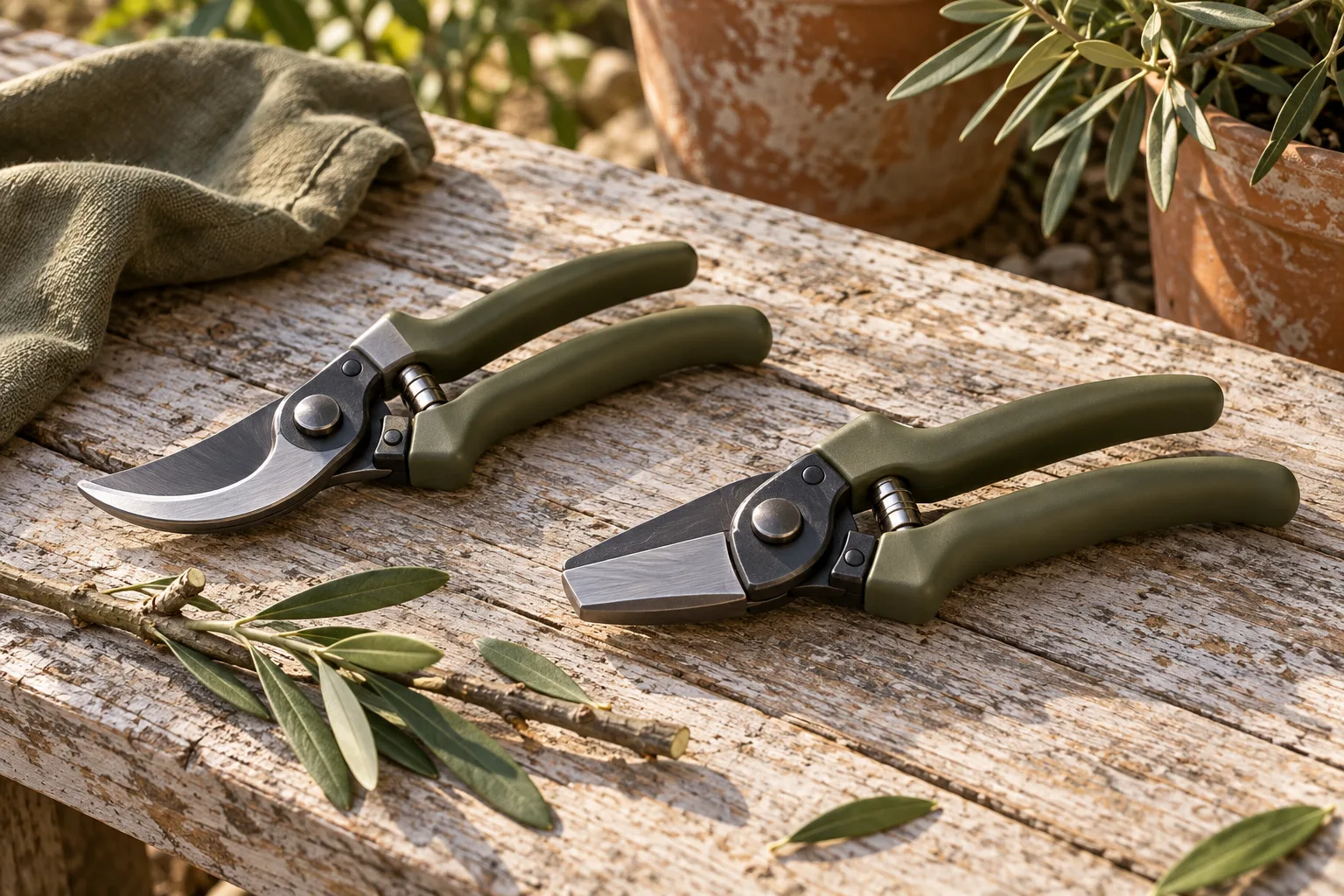
The useful first distinction is how the working parts meet. In a bypass design, the cutting parts pass alongside one another. In an anvil design, a blade meets a supporting surface. GARDENA Australia explains these mechanisms and associates them with different plant-material contexts. That manufacturer explanation helps you identify the question to ask, but it is not a universal approval for every branch or every tool carrying the same label. Check the exact model’s stated purpose and limits.
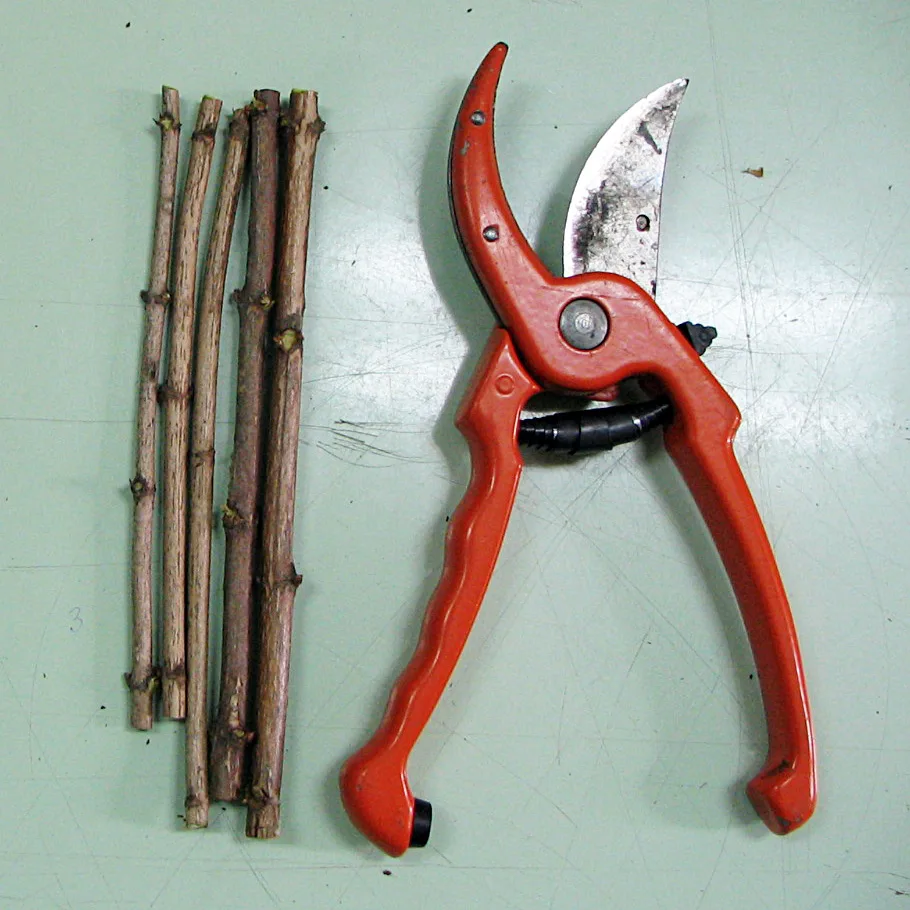
Connect the mechanism to the intended material
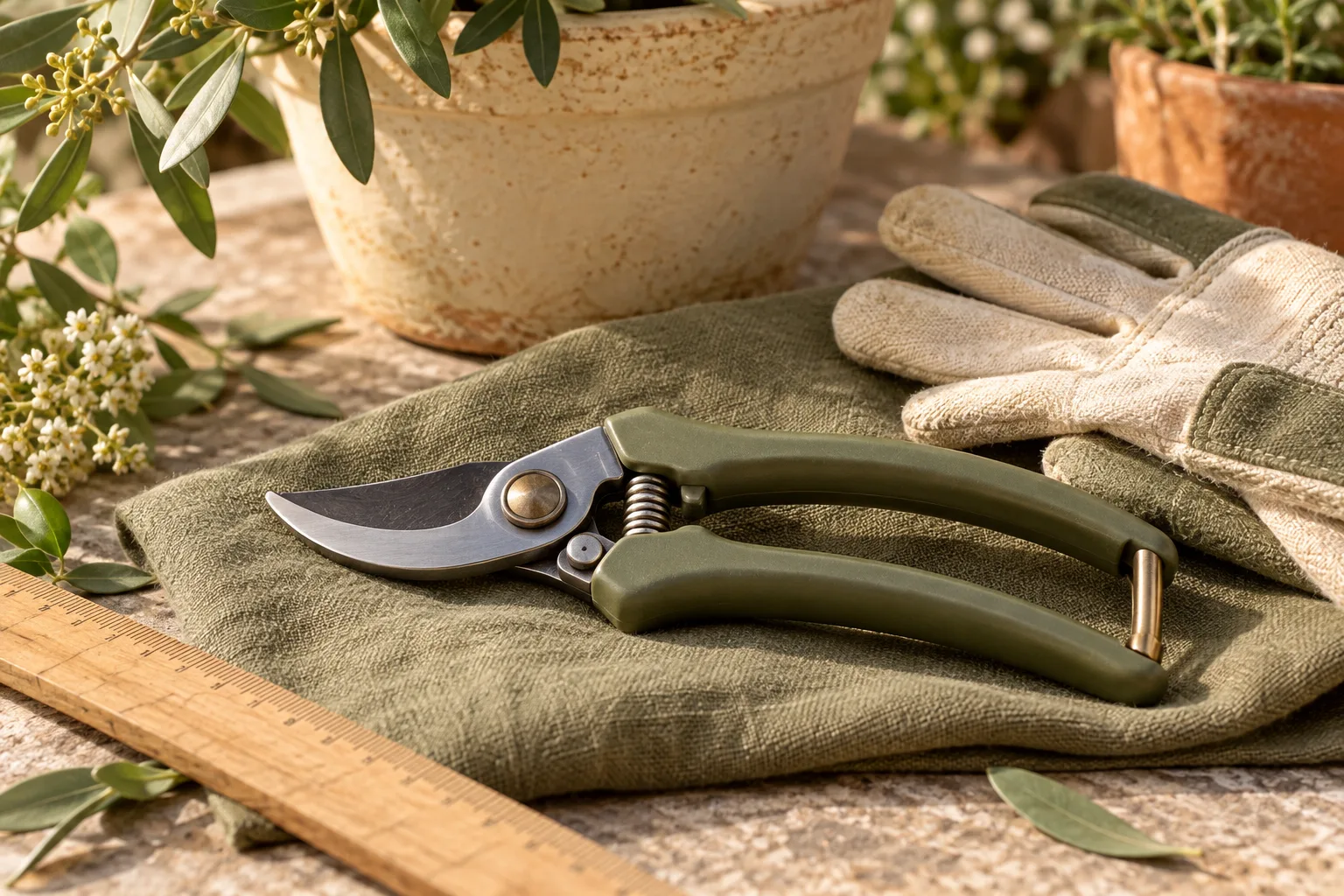
Describe the material and job to the retailer instead of asking only which secateurs are best. GARDENA generally presents bypass for living material and anvil for dead wood. Keep that as manufacturer guidance, then check whether the candidate’s instructions address your intended task. The real photograph of bypass secateurs beside cuttings shows the tool form and material together. It does not establish the diameter, condition or suitability of those particular cuttings, and it should not be used as a cutting tutorial.
Do not treat a photograph as a capacity rating
A wide-looking opening in a photograph does not establish a rated cutting capacity. Perspective, the position of the handles and the photographed model all affect what you see. Record a capacity only when it belongs to the exact model in a current manufacturer record, and keep any conditions attached. If that information is missing, leave the comparison cell unresolved. Do not replace it with a measurement taken from an image or a claim copied from a superficially similar listing.
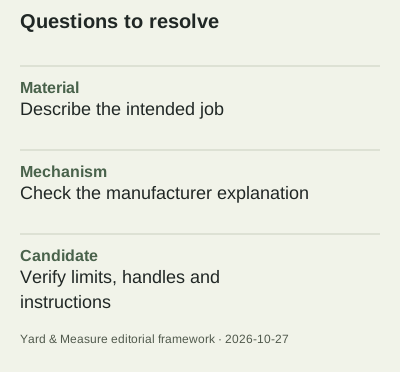
Separate handle design from cutting action
The rotating-handle secateurs photograph illustrates a handle feature that is separate from the bypass mechanism. Its source dates the image to 2013-03-13; it is not evidence of current availability or a comfort benefit for a particular person. A model can share a cutting mechanism with another while differing in handle shape, opening range, lock or parts support. Those are separate shopping questions, and a mechanism label does not answer them.
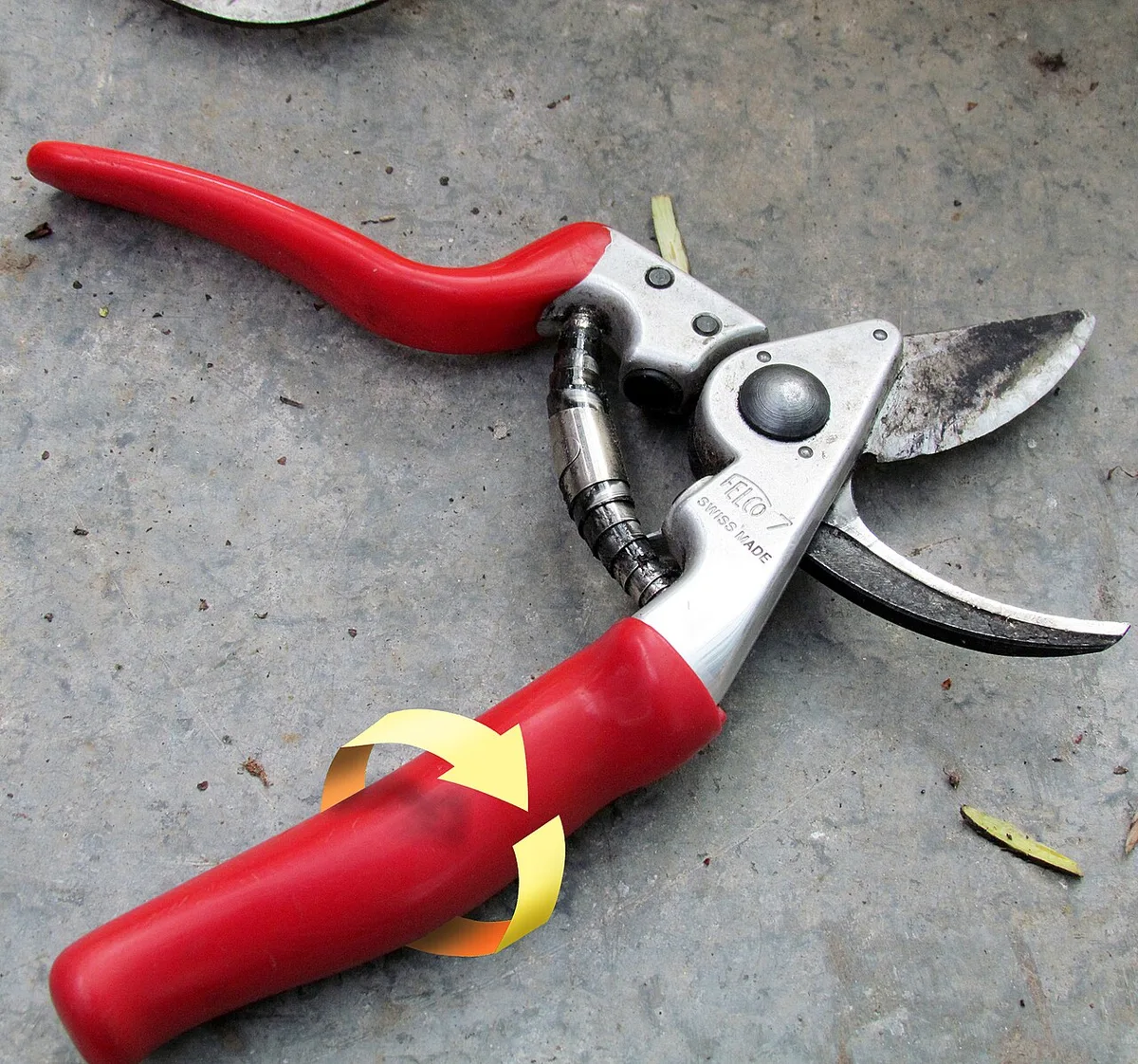
Keep historical examples in their proper role
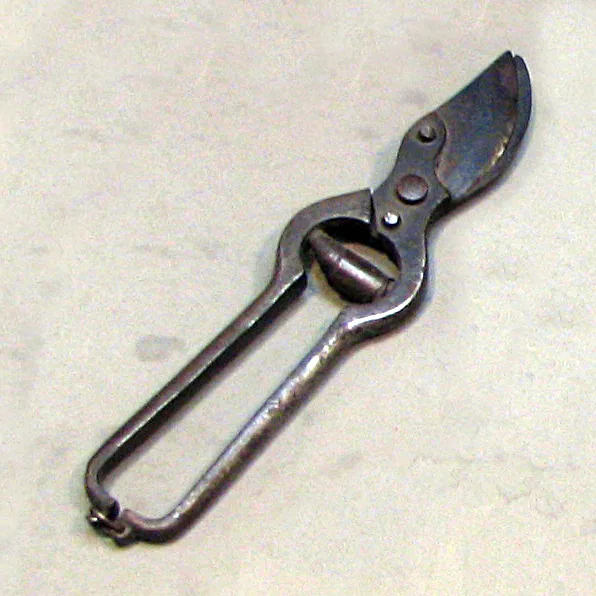
The historic metal secateurs photograph, dated 2006-01-15 on its source page, shows that a recognisable bypass form can appear in very different equipment. It is included to distinguish mechanism from modern product specification, not to recommend an antique tool. Use present-day model documentation for a purchase. GARDENA’s Australian manual finder explains how product names or article numbers lead to the relevant instructions; preserve that identifier in your comparison notes.
Finish with a documented shortlist
For each candidate, record mechanism, intended material, model-specific limits, handle questions and available instructions. Ask the seller to resolve gaps before you treat the tool as a match. This article was reviewed on 2026-10-27 and contains no hands-on performance ranking, pruning procedure or universal branch-size limit. The useful result is a shorter list supported by exact documentation, with uncertainties still visible rather than hidden behind a familiar product category. Keep the quoted model identifier with each answer so a later substitution does not inherit an unsupported recommendation.
GARDENA AU manufacturer explanation ? GARDENA Australia manual lookup ?