Loppers add reach and storage length, not universal capacity
Treat reach, working mechanism and stored length as separate questions when comparing loppers with hand pruners.
Updated:
Start with the job rather than the handle length
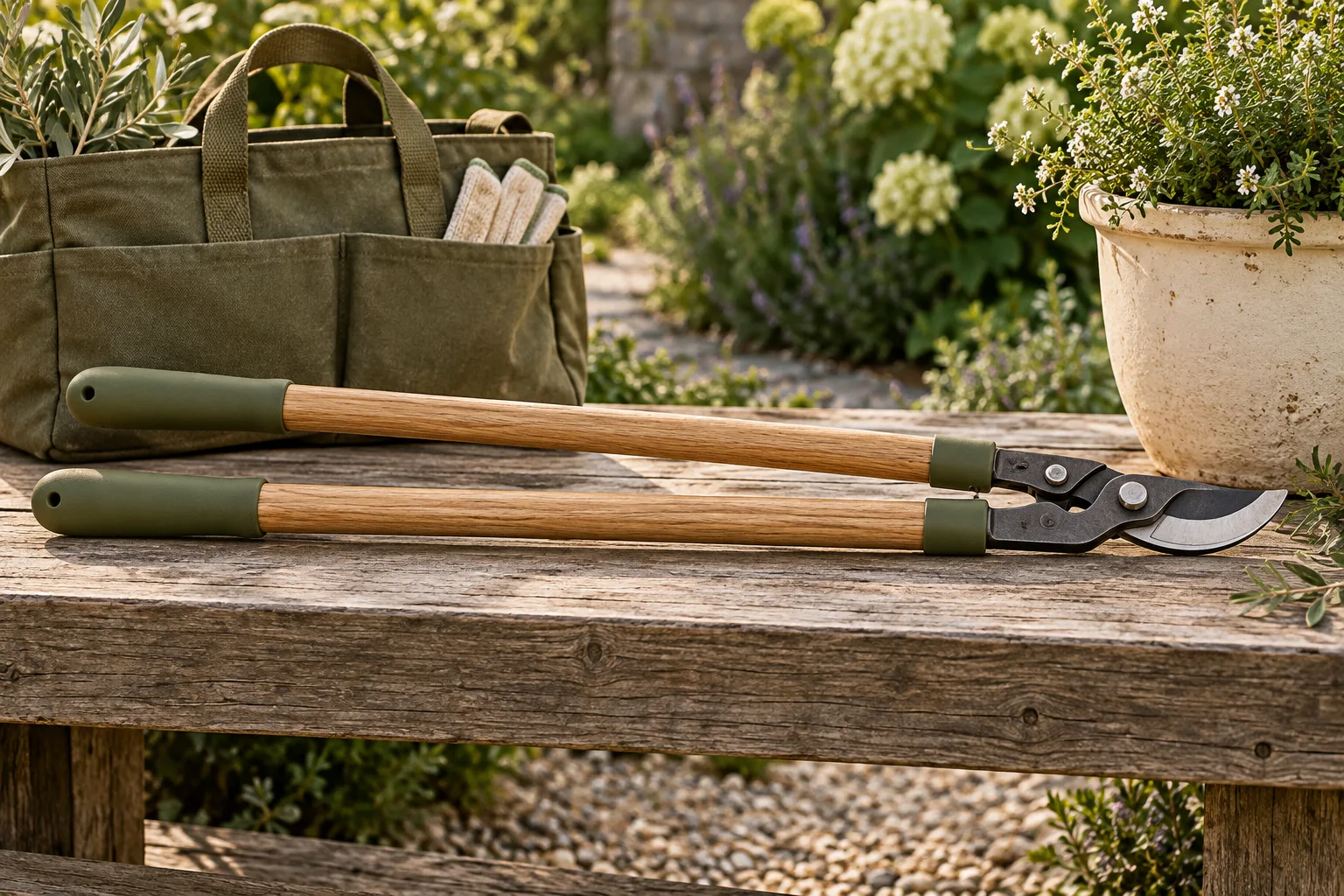
Longer handles change the shape of a tool and the space it occupies. They do not create a universal permission to cut larger material. Describe the intended job and ask for the exact model’s documented purpose and limits. The real lopper photograph shows a geared bypass form, which differs visibly from a small hand pruner. Its image-source description is not a substitute for a current manufacturer manual, and this guide does not adopt a capacity figure from that photograph.
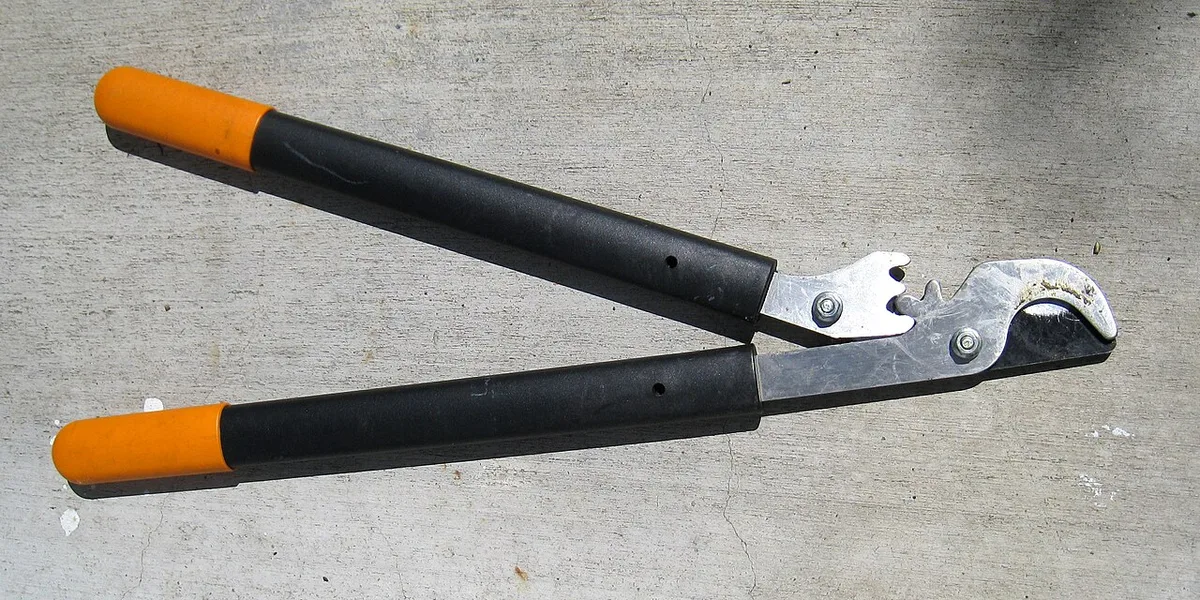
Keep mechanism and reach in separate columns
Bypass and anvil describe the relationship of the working parts; handle length describes another aspect of the equipment. GARDENA Australia’s mechanism explanation is useful background, but a lopper needs its own model-specific documentation. A longer tool may also introduce questions about storage, transport and how its intended use fits the actual garden. Those questions should remain visible instead of being reduced to a single bigger-is-better comparison. No overhead-work or reach technique is provided here.
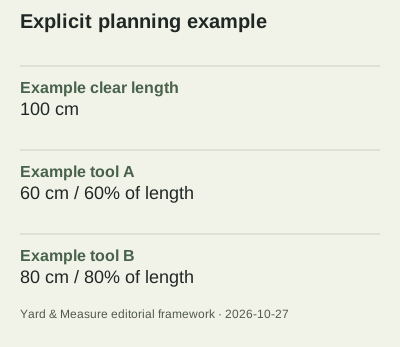
Compare a hypothetical storage envelope
Imagine a storage compartment with 100 cm of clear length. An illustrative closed tool measuring 60 cm uses 60% of that length; a different closed tool measuring 80 cm uses 80%. The arithmetic leaves 40 cm or 20 cm respectively, but those differences do not establish safe storage or accessibility. Width, head shape, supports and the manufacturer’s storage instructions still matter. Measure the actual proposed tool in its permitted stored configuration rather than estimating from handle length alone.
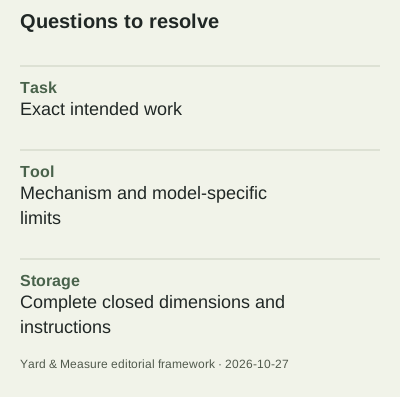
Read the whole form in the photographs
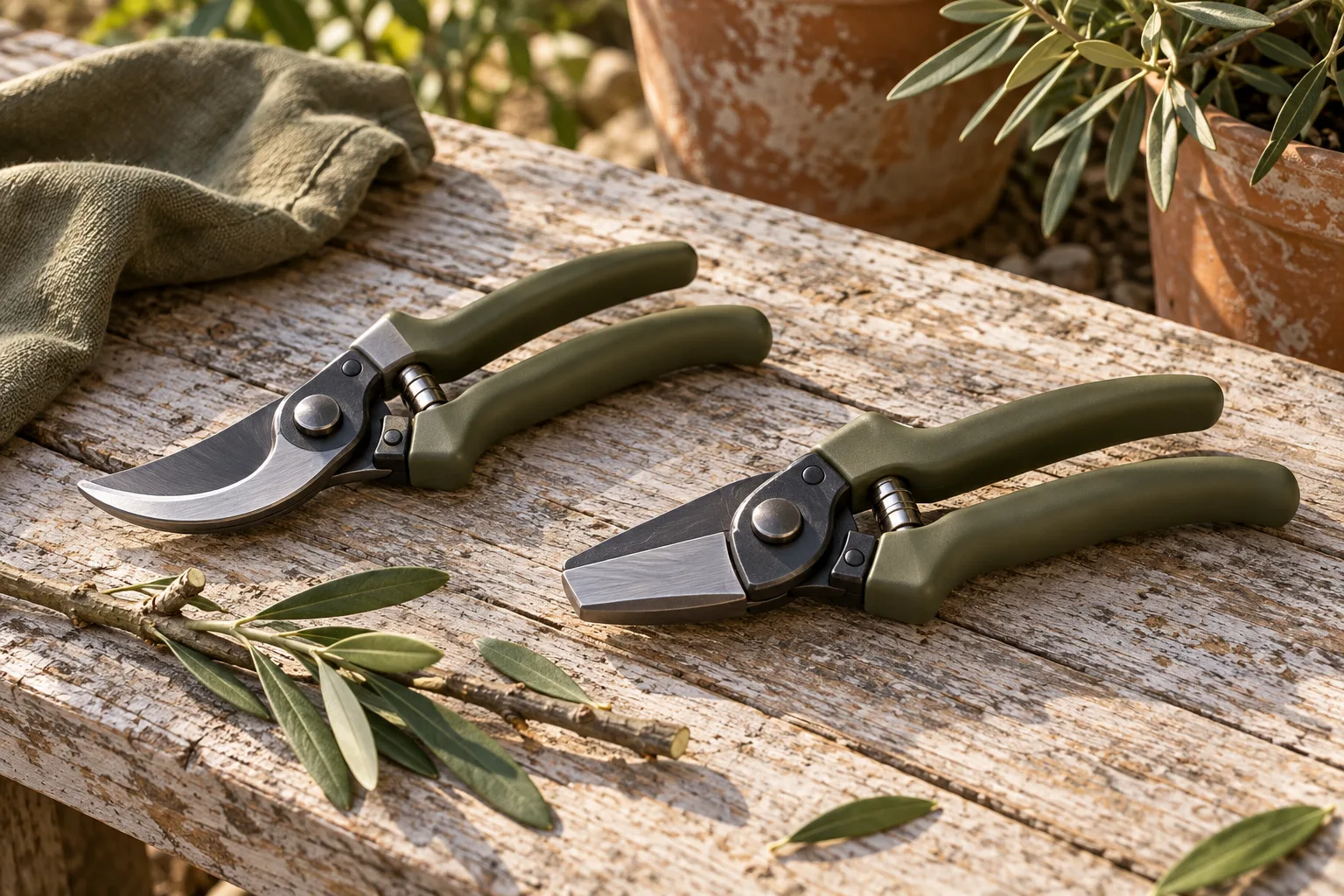
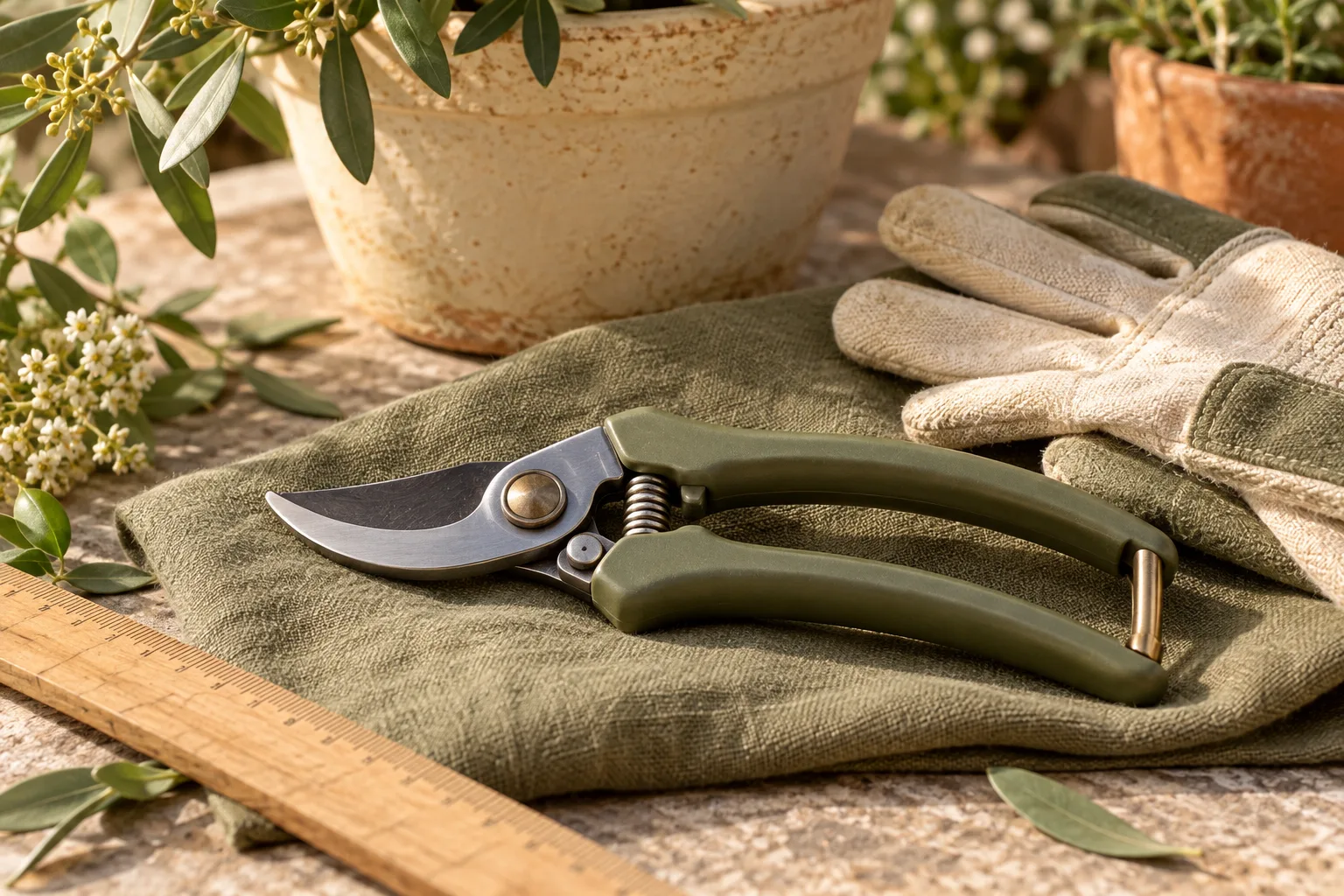
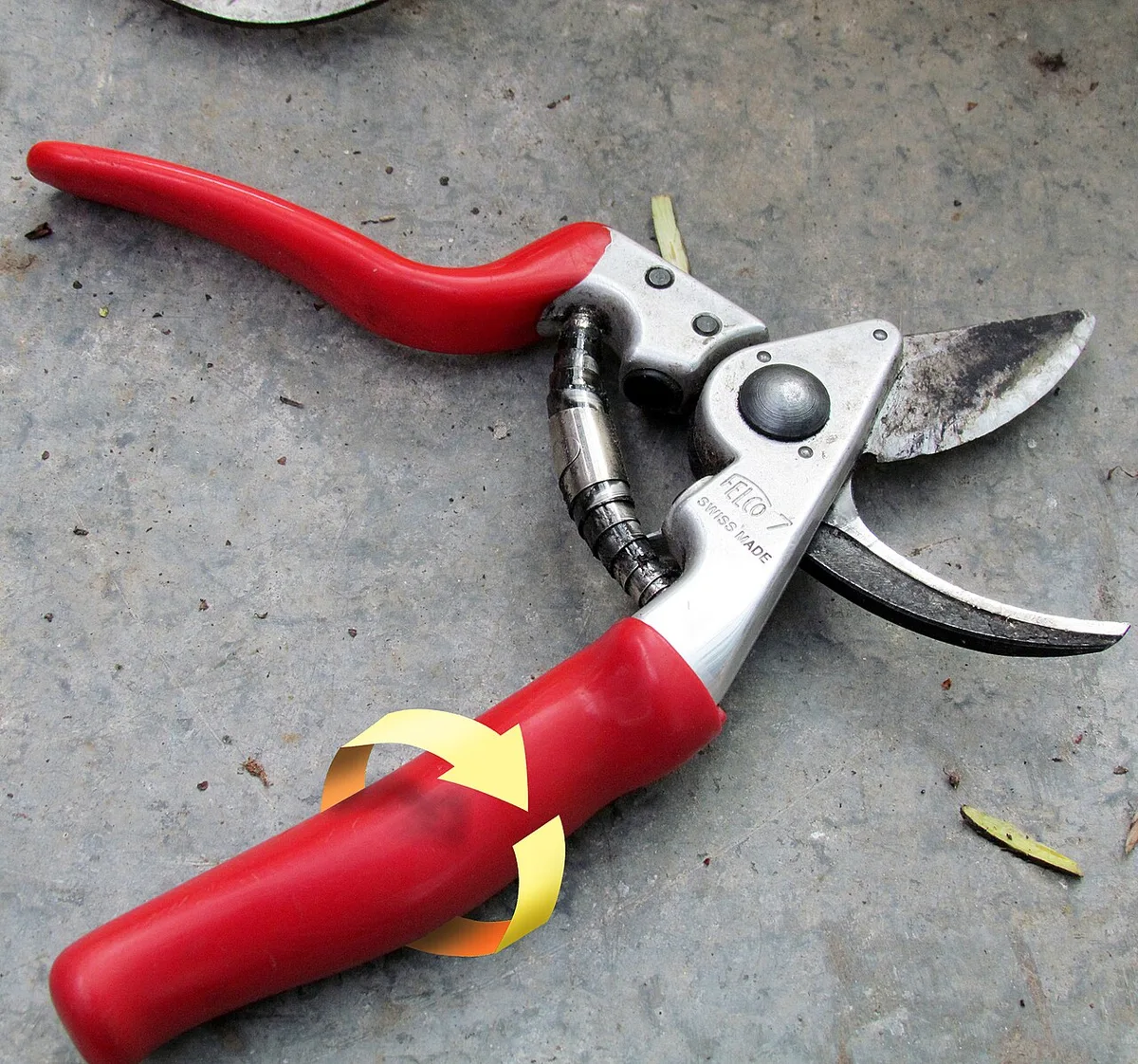
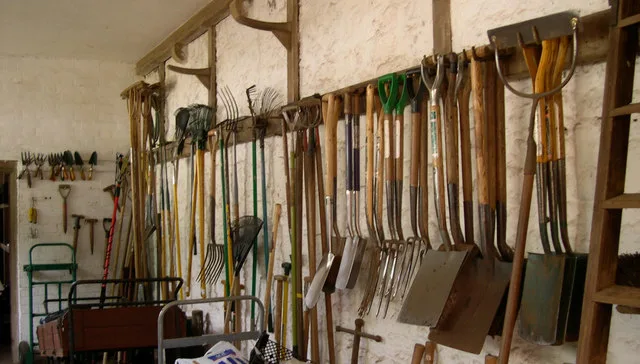
The rotating-handle secateurs photograph illustrates a compact hand-tool form with a distinct handle feature. It is included for contrast with the lopper, not as a performance rival or a comfort recommendation. The potting-shed photograph shows long-handled equipment occupying a wall and surrounding space. It illustrates why a purchase can change a storage arrangement even when the cutting task seems similar. We have not inspected that shed or assessed its storage method.
Check identification and support before buying
Record the exact model, manual location and available parts information. If a listing combines photographs of several versions, ask which one will be supplied. GARDENA’s Australian manual page directs readers to product-specific records and article-number searches; use the equivalent official channel for the chosen brand. A clear manual is especially useful when product names blur distinctions between hand pruners, loppers and other cutting tools. Keep any seller clarification with the purchase record.
Leave the unresolved work out of the recommendation
If the job exceeds the documented purpose or remains difficult to describe, seek an appropriate assessment rather than choosing a longer handle by default. Reviewed on 2026-10-27, this article is a shopping and storage framework, not a pruning procedure. It includes no tested leverage ratio, branch-diameter rule, reach limit or claim that a tool is suitable for a particular tree. The decision should rest on the actual task, exact equipment and documented limits together. Recheck those dimensions if a retailer substitutes a different version or accessory bundle.
GARDENA AU manufacturer explanation ? GARDENA Australia manual lookup ?