Measure the lawn you mow, not the whole property
Turn a rough garden sketch into a useful mower-shopping brief, with a worked area example and the measurements area alone cannot replace.
Updated:
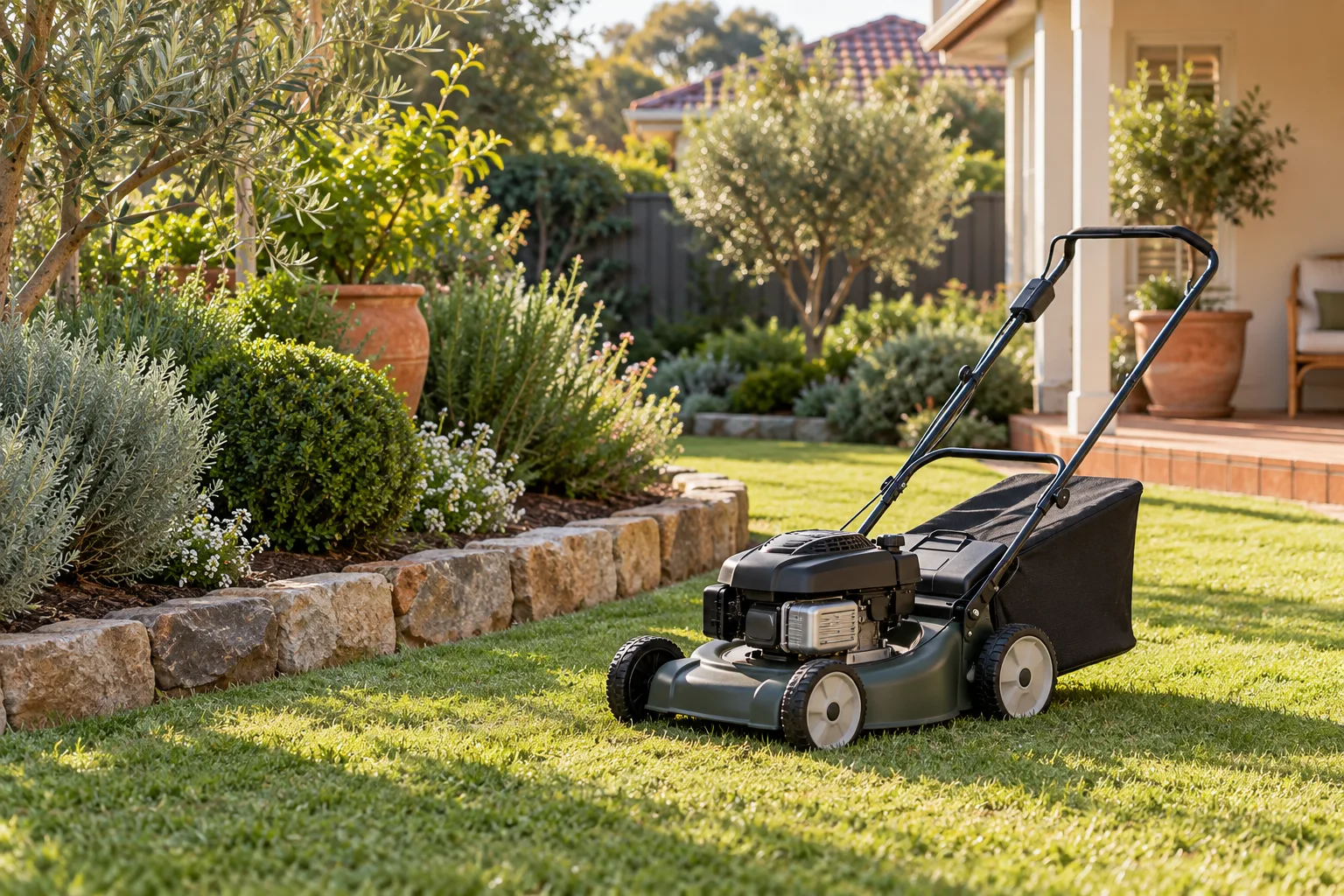
Start at the grass boundary
A property listing gives you the land area, which includes the house, driveway, beds and other surfaces that a mower never crosses. Start your buying brief with the actual patches of grass. Draw their outlines on paper and label the parts you intend to mow. Keep a separate note for narrow access routes, slopes and obstacles; combining everything into one area number hides those differences.
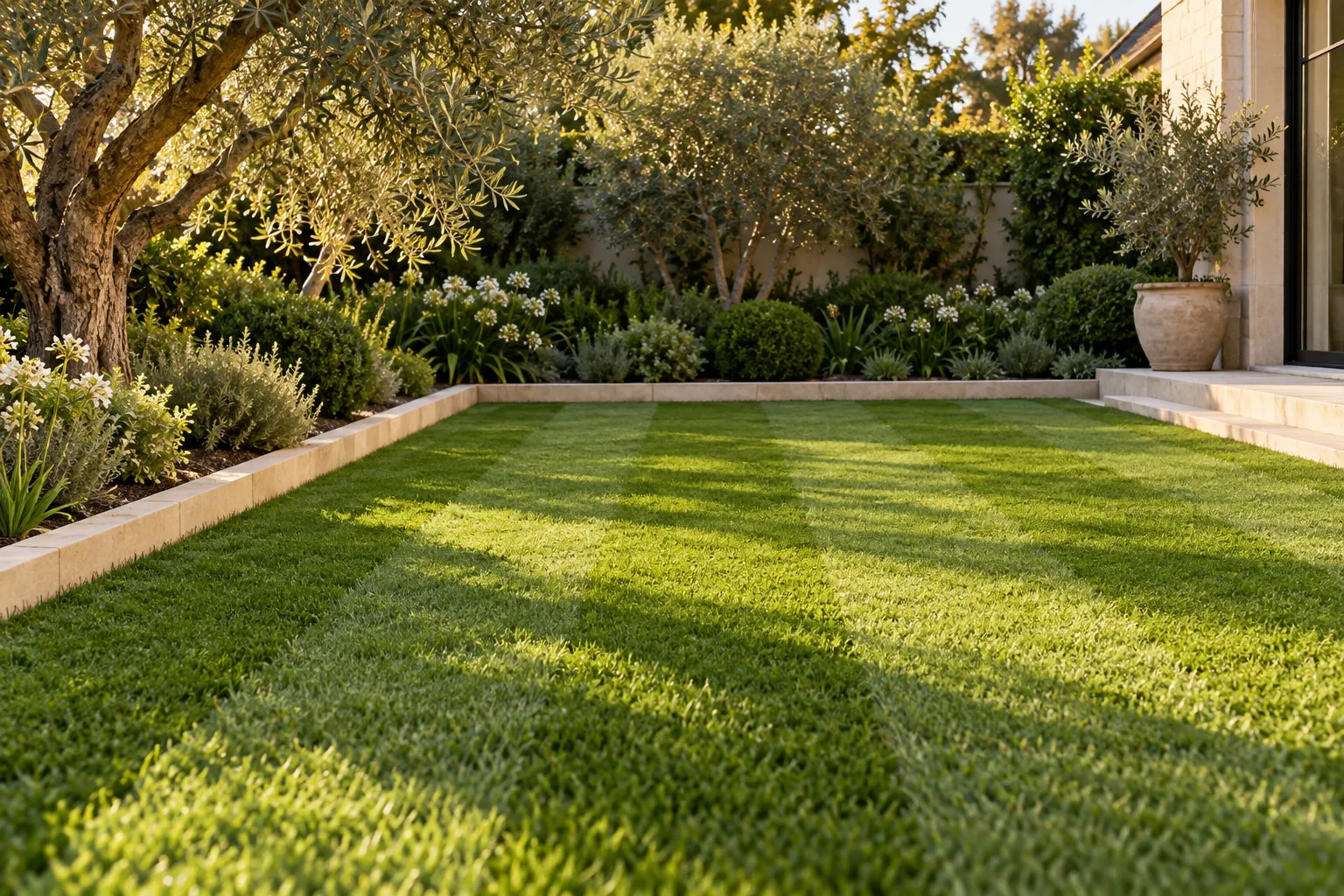
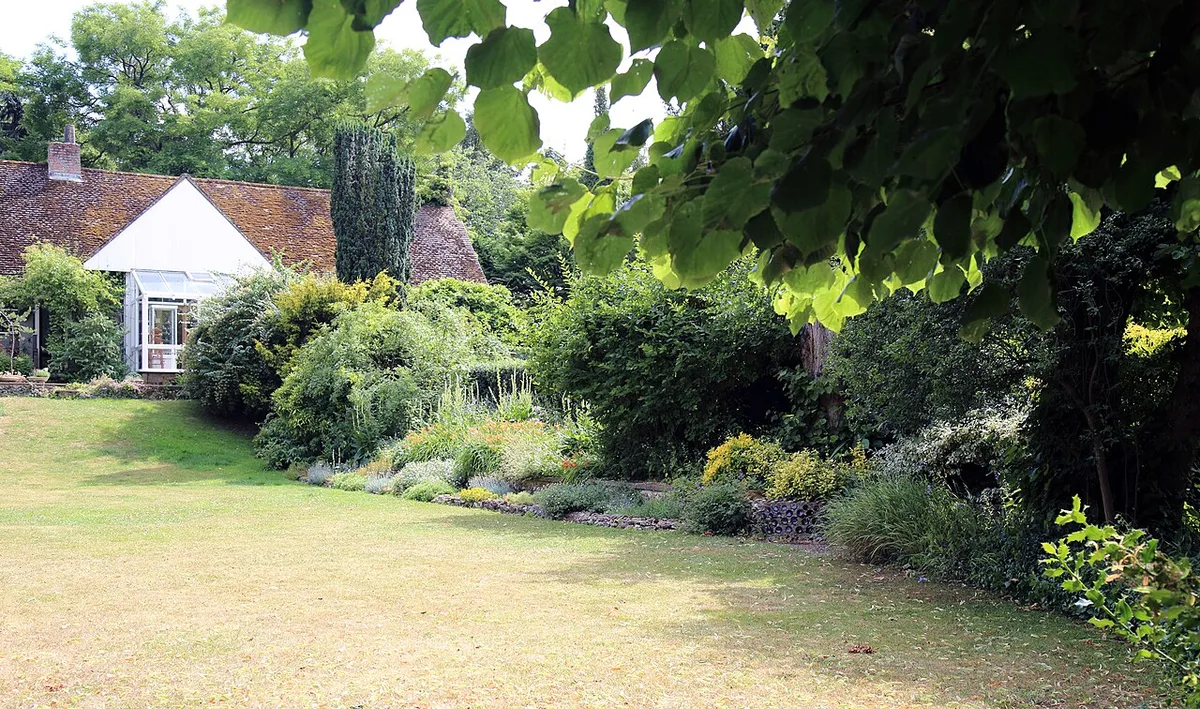
Sydney Water recommends making a simple garden plan when discussing irrigation. The same habit of separating lawn from planted areas makes an equipment conversation clearer, although its watering guidance is not a mower-capacity recommendation. The photographed garden below is in Essex, England. It illustrates the boundary between grass and a bed, not Australian planting conditions.
Work through one rectangular example
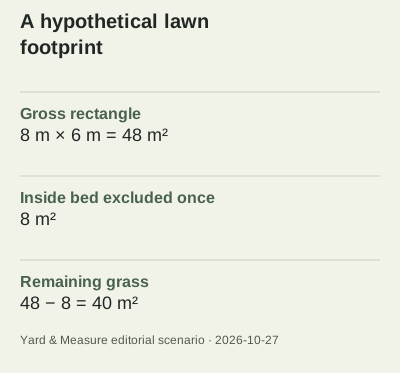
For a hypothetical rectangular patch, measure a length of 8 m and a width of 6 m. Multiplying gives a gross footprint of 48 m². If a planted bed wholly inside that rectangle occupies 8 m², subtract it once: the remaining lawn is 40 m². Do not subtract a bed outside your measured rectangle, and do not subtract overlapping exclusions twice.
In this example the excluded bed is about 16.7% of the gross footprint, while grass occupies about 83.3%. Those proportions describe this sketch only. They do not predict mowing time, battery endurance or an appropriate mower model. The area calculator uses the same rectangle-minus-exclusion arithmetic and makes its inputs visible.
Break an irregular lawn into useful pieces
A curved border rarely fits a single rectangle neatly. Divide the lawn sketch into several non-overlapping shapes that you can measure, then keep the component areas alongside your total. Mark rough estimates as estimates. If a small disputed corner could change a retailer’s recommendation, improve that measurement before committing to a purchase.
Photographs help communicate obstacles and shape, but perspective prevents a normal garden photograph from being a dependable measuring tool. Measure on site or use a suitably scaled plan. Keep paved paths separate even if they run between two lawn patches: crossing distance may matter to handling, but it is not grass area.
Add the dimensions that a total cannot show
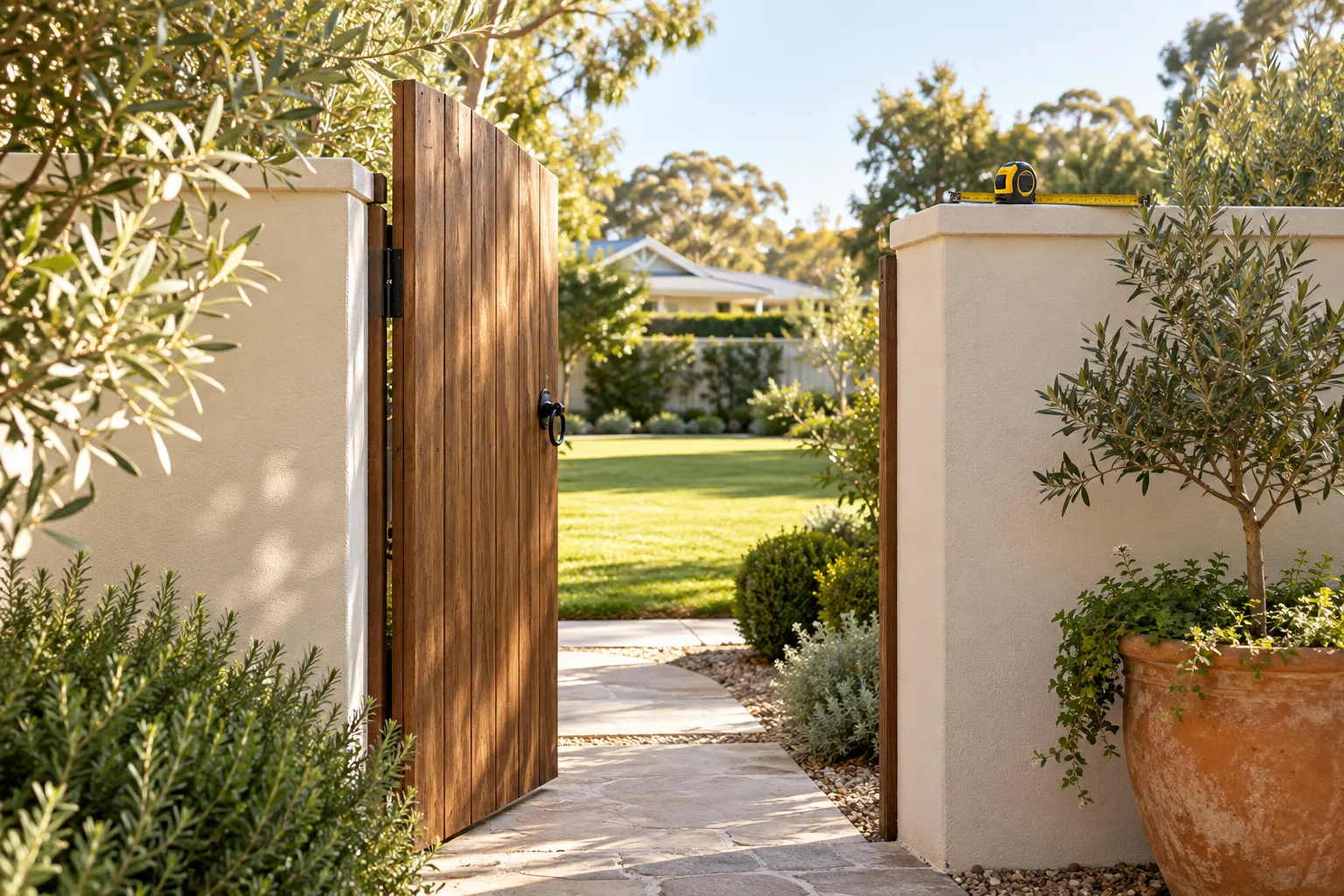
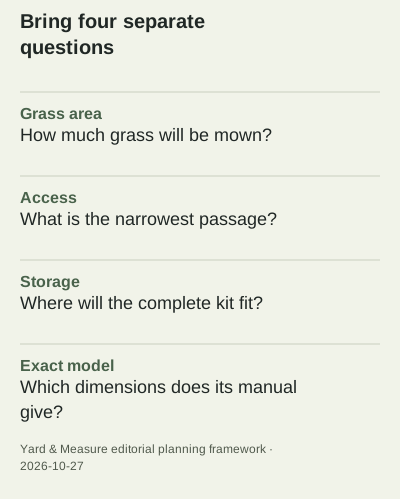
Record the narrowest gateway and the width of any passage from storage to lawn. Ask for the mower’s overall dimensions in the relevant configuration, rather than treating cutting width as overall width. A wider cutting path can still come with a body, wheels or handles that require different clearance.
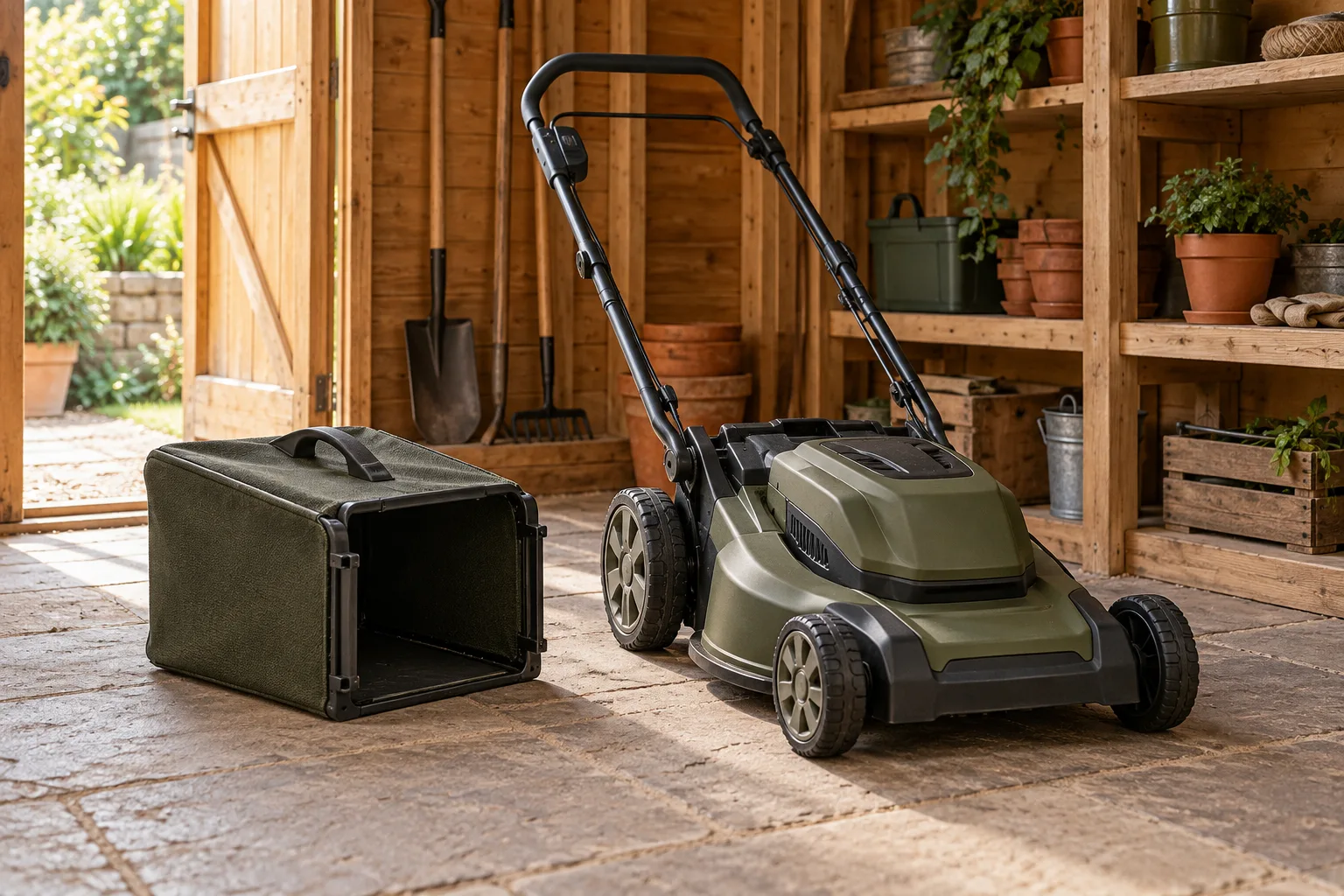
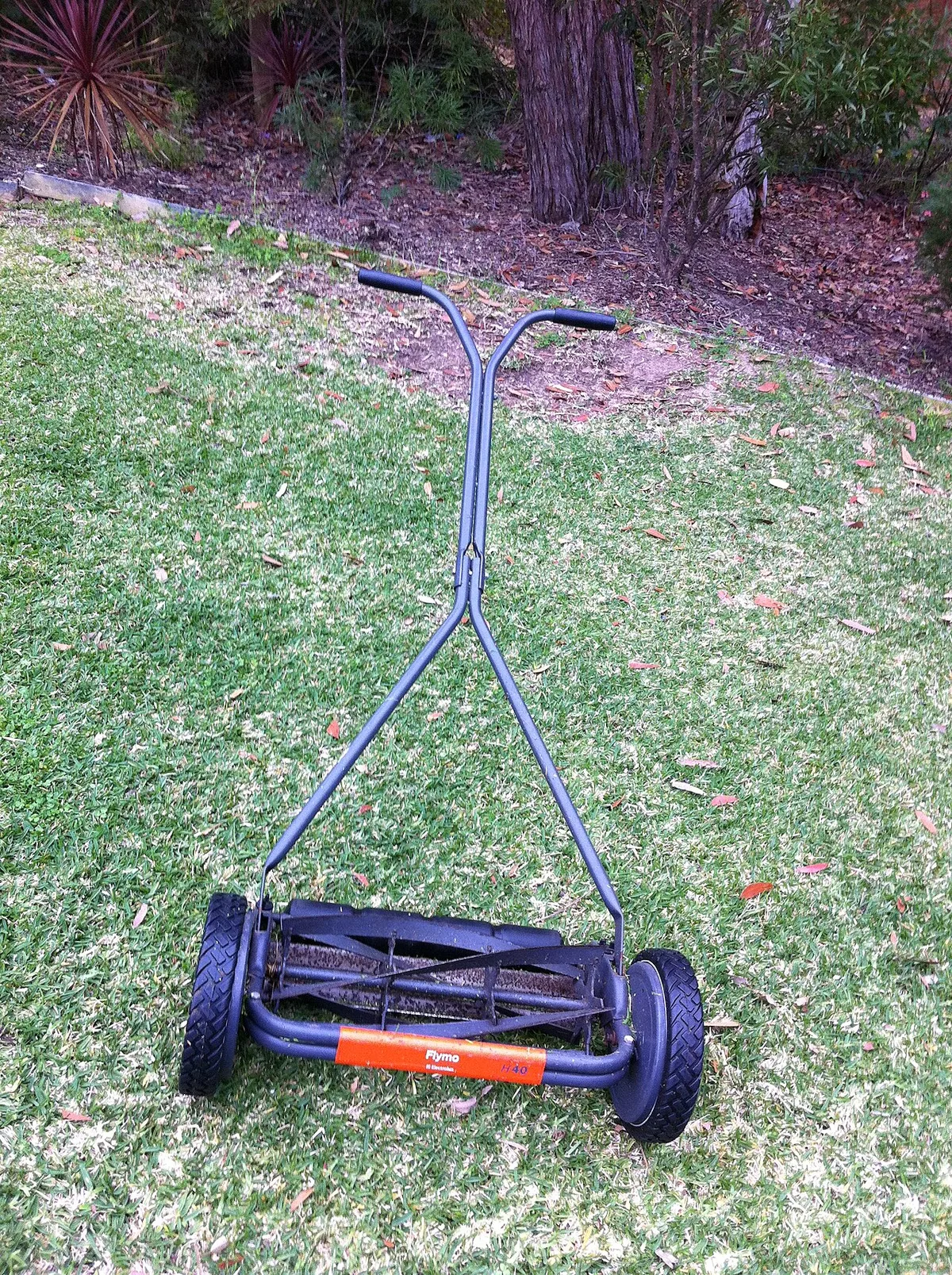
Husqvarna Australia relates cutting width to lawn area in its manufacturer buying guidance. Treat that as one source of shopping context, then check the exact model’s instructions and the physical route through your own garden. The real reel-mower photo illustrates a distinct equipment form; it is not an endorsement, performance test or proof that the photographed model remains available.
Husqvarna AU manufacturer buying guidance ?
Take a complete brief to the shop
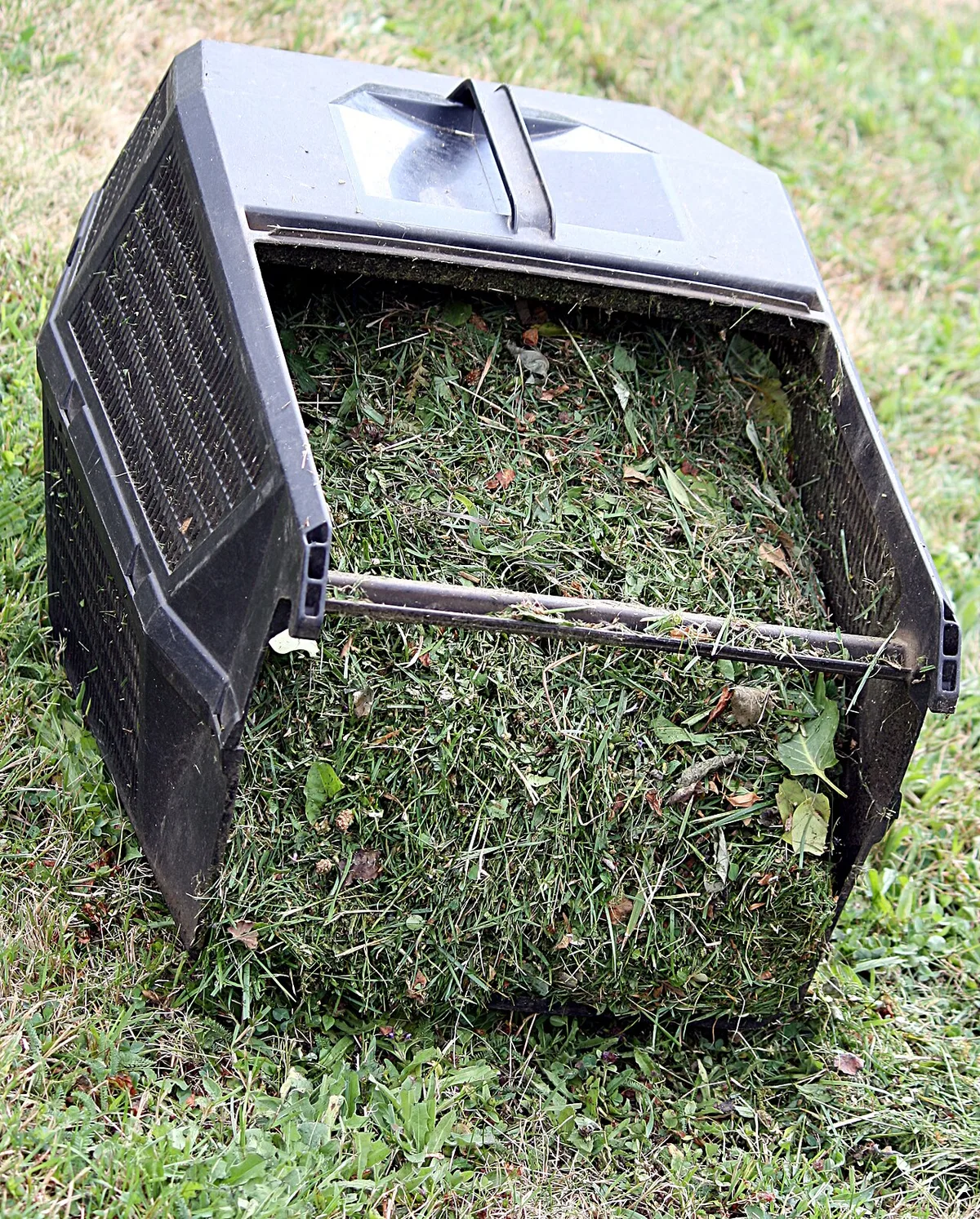
Bring the lawn sketch, dimensions, approximate grass area and photographs of access restrictions. Include the storage space and any separate collection equipment. A detached grass catcher, like the one pictured, still needs somewhere to live; a mower footprint alone does not describe the whole kit.
Ask the retailer to explain how a proposed model fits those conditions and which claims come from its current manual. Keep unanswered questions on the brief instead of turning them into assumptions. This planning example was reviewed on 2026-10-27. It contains no measured product tests, current prices, slope limits or operating instructions.