Make a battery-and-charger compatibility matrix
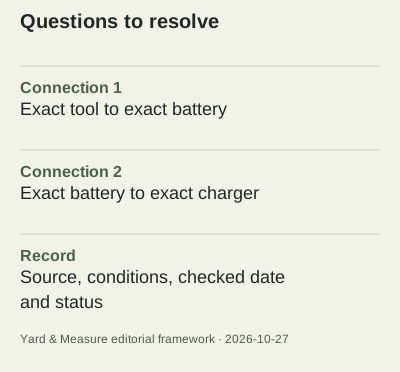
Keep tool, battery and charger identifiers in one evidence table, with unresolved combinations clearly marked.
Updated:
Make the table about exact components
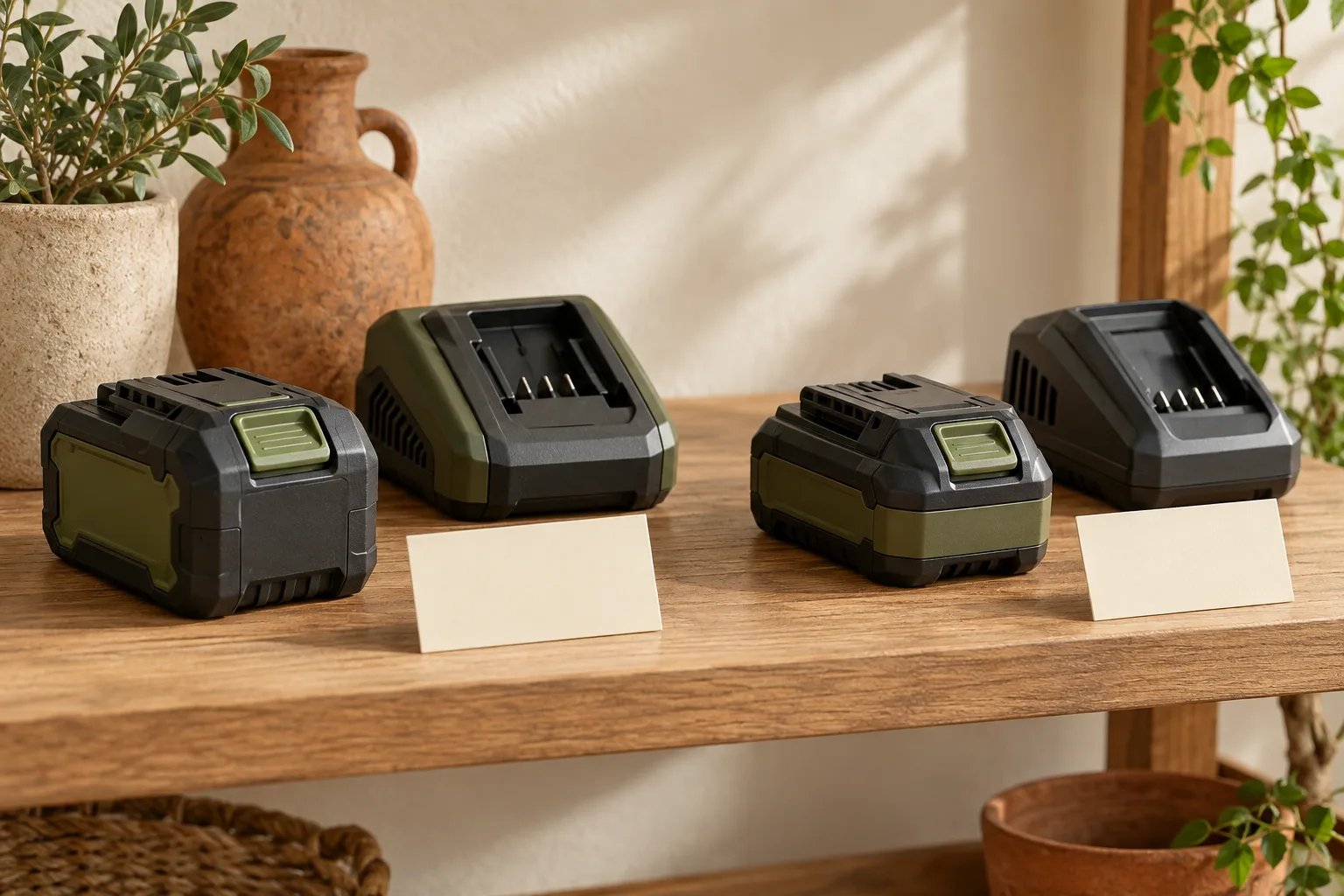
A compatibility matrix is a record of evidence, not a way to infer fit from appearance. Put the exact tool model in one column, the battery identifier in another and the charger identifier in a third. Add the manufacturer source, date checked and any conditions attached to the statement. The real battery-and-charger photograph illustrates why the components need separate identities. It does not certify the pictured combination for Australian use or establish compatibility with any tool discussed on this site.
Verify both connections independently
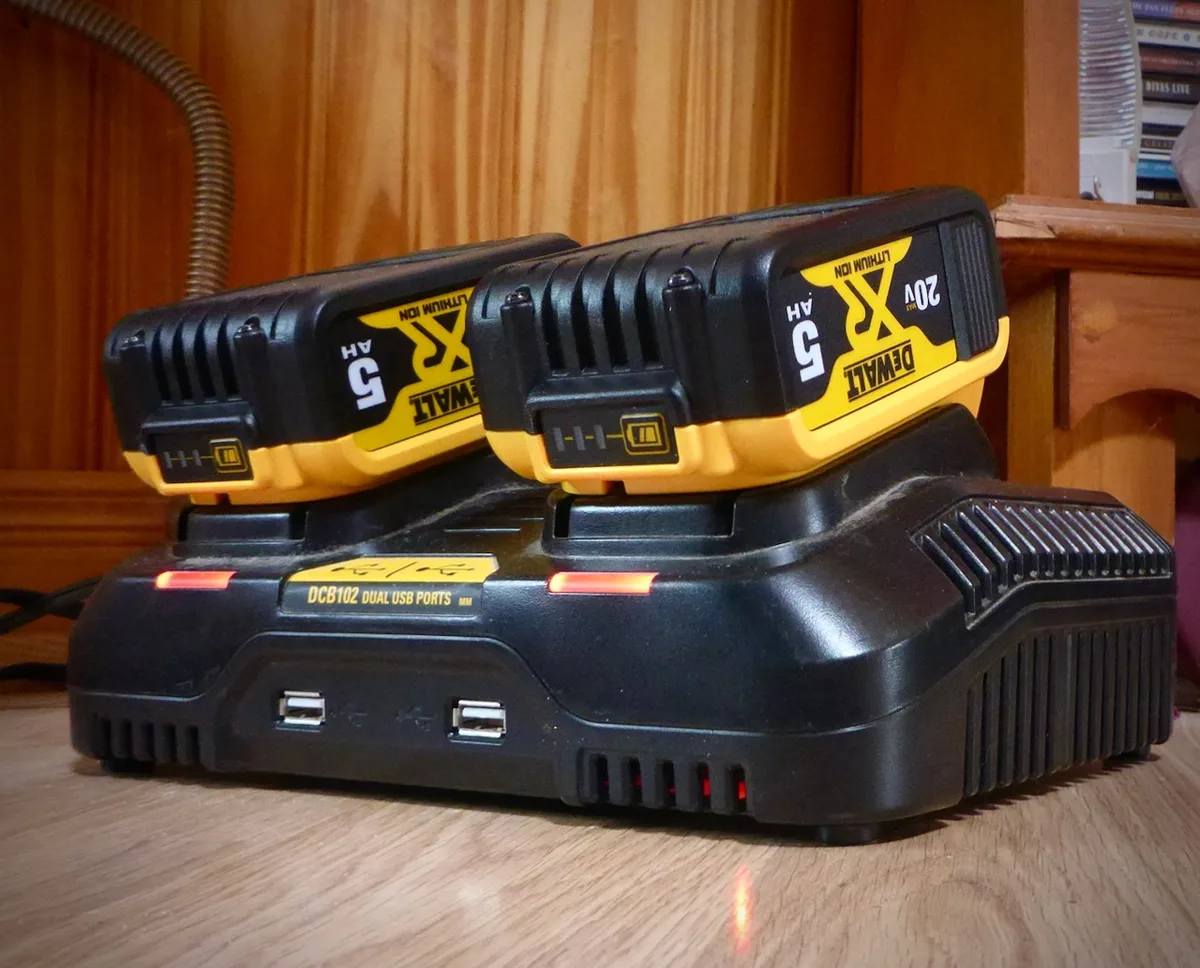
The tool-to-battery relationship and the battery-to-charger relationship are separate questions. A confirmed answer to one does not automatically resolve the other. RYOBI Australia’s support information describes compatibility within its specified system and directs attention to the correct charger. Keep that brand-specific context attached. For another system, find its own official compatibility information. Do not use a shared colour, similar connector outline or nominal voltage alone as the basis for marking a combination confirmed.
Use explicit states instead of blank cells
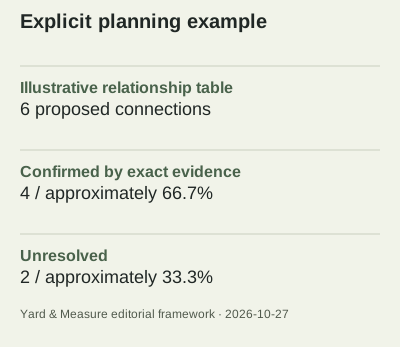
Mark a cell confirmed only when the exact relationship is supported. Use unresolved when evidence is missing, and not listed when the source does not include a proposed combination. Those states describe the record; they do not invite an experiment. In a hypothetical table of six proposed relationships, four confirmed entries represent about 66.7%, while two unresolved entries represent about 33.3%. Neither percentage measures safety, quality or how much of the garden can be completed.
Do not force other power types into the table
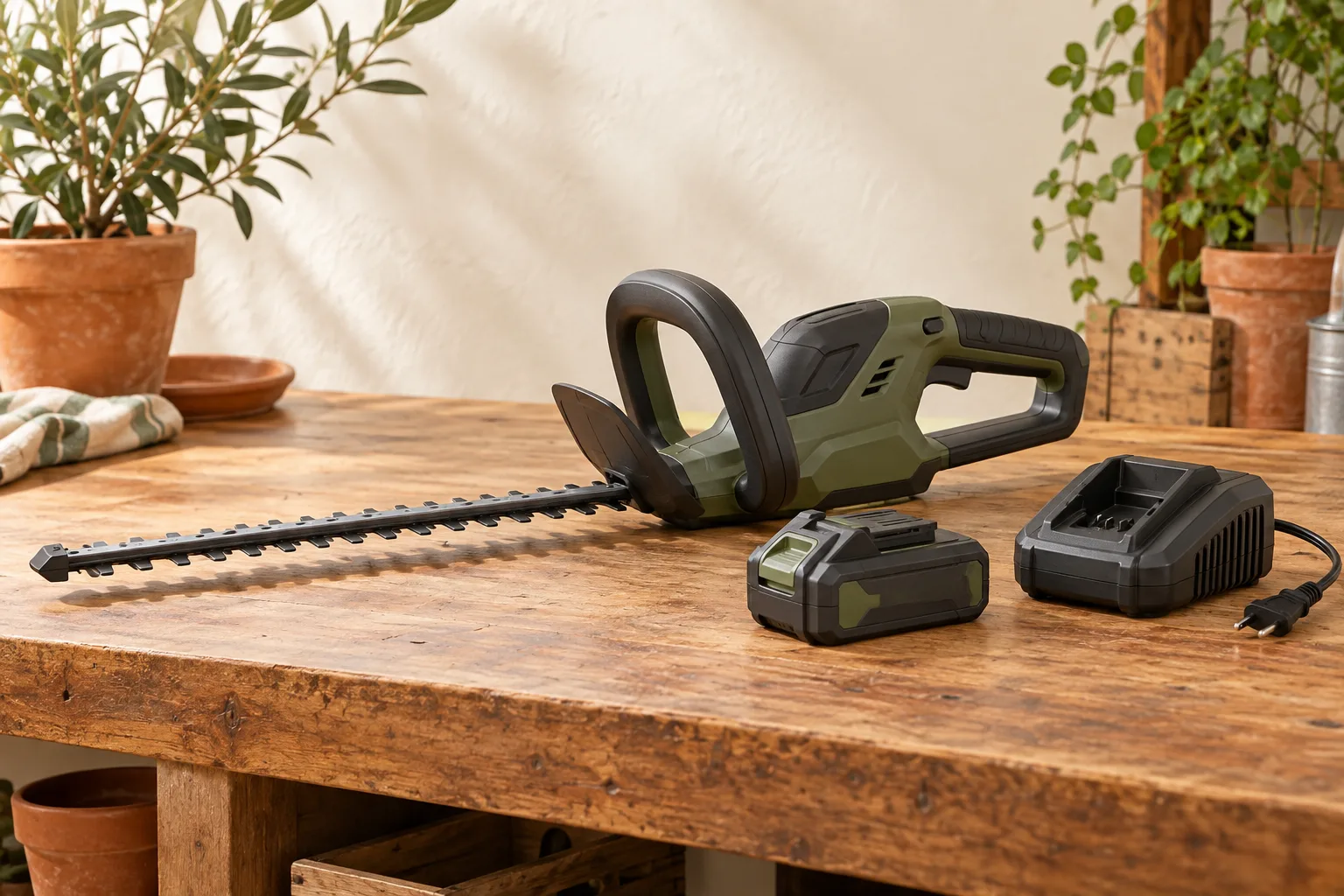
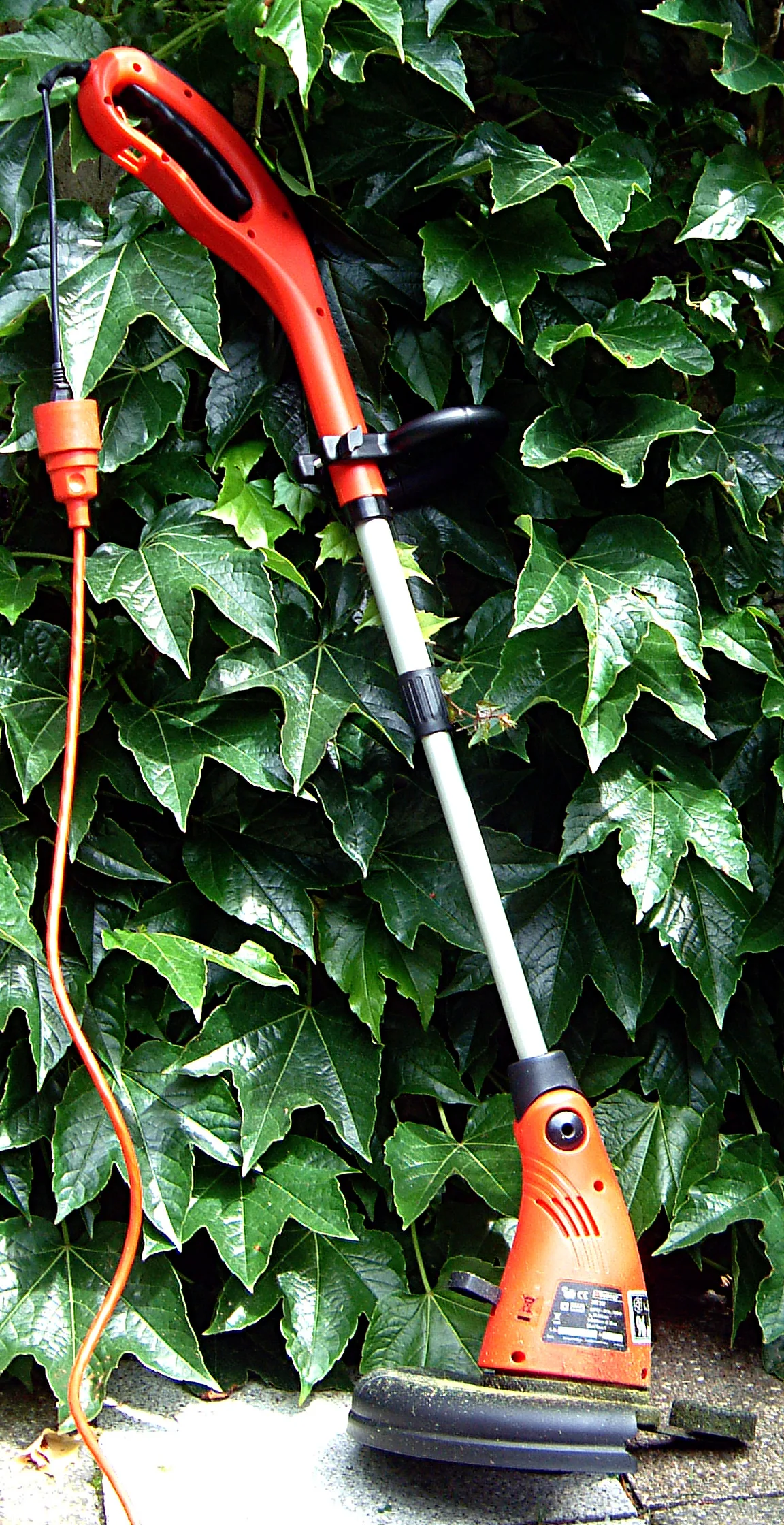
The real corded-trimmer photograph illustrates equipment that does not belong in a removable-battery compatibility matrix in the same way. Keep its own model and instructions in the wider inventory instead of creating a fictitious battery relationship. The table should reflect the actual equipment architecture, not a desire to place every tool in the same format. A clear exclusion is more useful than an apparently complete spreadsheet containing meaningless connections.
Keep the matrix with the equipment inventory
The real potting-shed photograph shows a mixed tool collection, which is the kind of context where similar-looking accessories can become difficult to track. It is not a battery-storage example. Keep the evidence table accessible with receipts and manuals, and follow each component’s instructions for its actual storage and use. Manufacturer manual services, such as GARDENA’s Australian lookup, provide a route to model-specific information but should not be treated as proof for another brand’s products.

Review the affected row after any substitution
A new battery, charger or tool version changes the relationship being recorded. Recheck the relevant rows and keep the old entries marked as superseded so they do not look current in a later search. Reviewed on 2026-10-27, this guide does not recommend adapters, modifications, charging methods or trial combinations. Its output is a traceable list of confirmed evidence and unresolved questions. If the manufacturer cannot confirm a proposed relationship, leave it unresolved rather than converting uncertainty into permission. Keep the supplier response attached to the exact row.