What cutting width changes in a simple pass-count model
Compare cutting widths with explicit overlap assumptions, then keep the result separate from time and battery claims.
Updated:
Read width as a geometric input
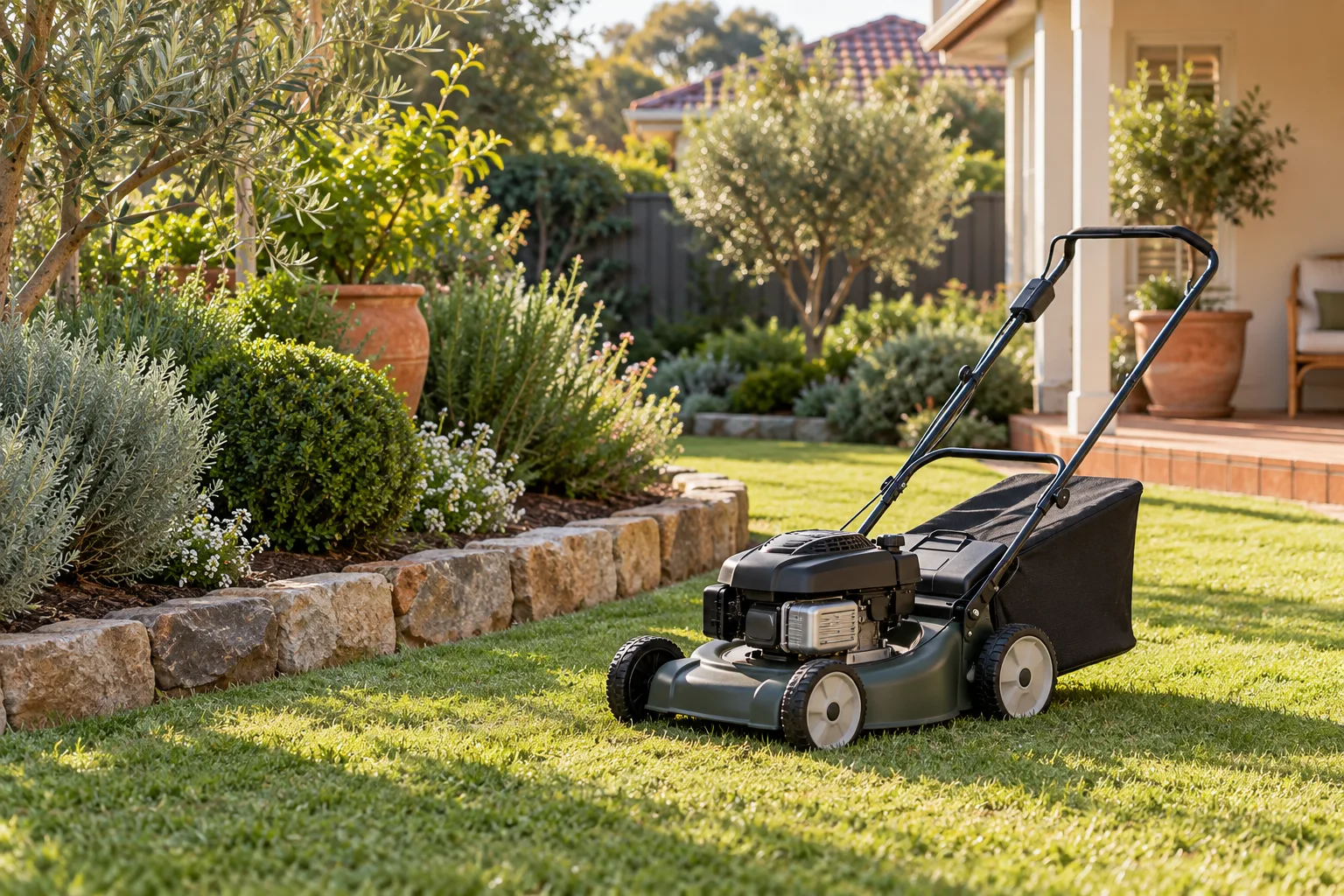
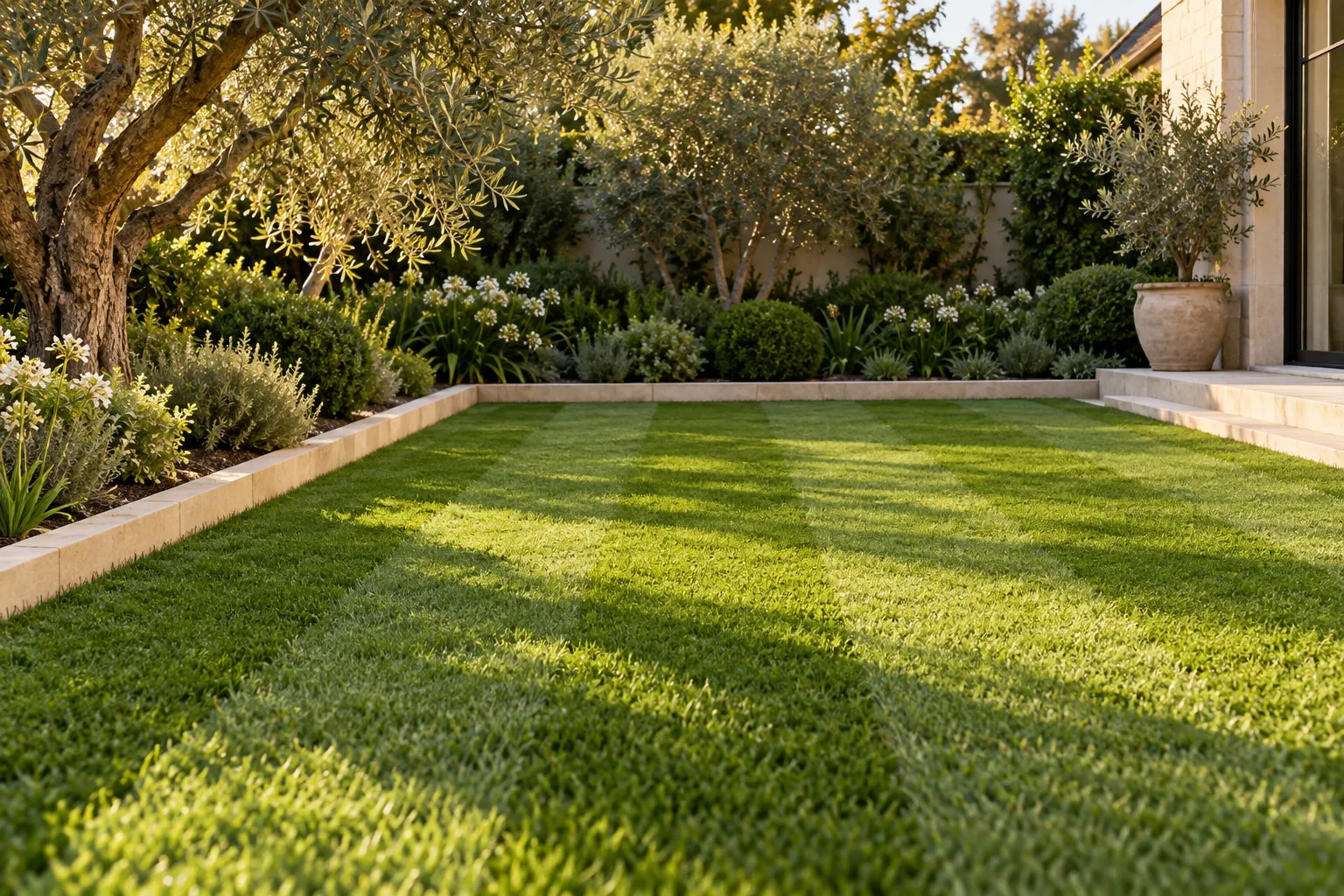
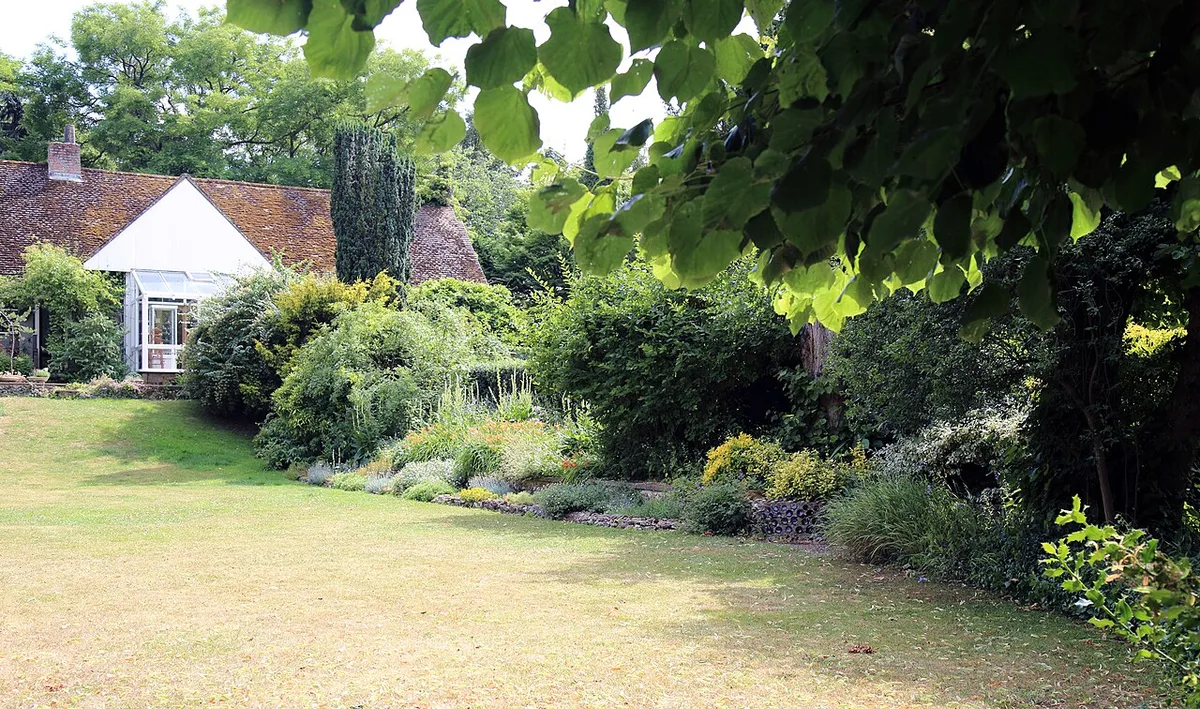
Cutting width describes a strip, not the complete job. A model that divides the lawn width by the cutting width can help you understand why a wider deck changes the number of parallel passes. It cannot tell you how quickly a person will finish a real lawn. Turns, obstacles, grass conditions and the machine itself remain outside that calculation. The curved bed in the real garden photograph shows why a simple rectangle is only a starting model.
Write the overlap assumption down
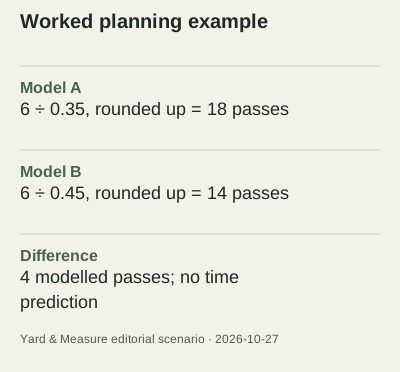
Consider a hypothetical lawn 6 m wide. Enter a 40 cm cutting width and a 5 cm overlap. The effective strip becomes 35 cm, or 0.35 m. Dividing 6 by 0.35 gives about 17.14, so our conservative model rounds upward to 18 passes. It applies the overlap allowance to every strip, including the first; this is deliberately simpler than modelling the first strip separately. The assumed overlap is 12.5% of the cutting width. It is an example input, not an operating recommendation.
Compare another width without changing the lawn
Keep the same hypothetical lawn and overlap, then change cutting width to 50 cm. The effective strip is now 45 cm and the model gives 14 passes. That is four fewer modelled passes, about 22.2% fewer than eighteen. Do not turn that percentage into a time saving. Each pass still needs a real route, and there is no measured travel speed or turning time in this example. You can reproduce both calculations in the mowing pass tool.
An overlap entry greater than or equal to cutting width leaves no positive effective strip, so the tool rejects it. A blank field is also rejected rather than silently becoming zero. Keep units explicit: the lawn entry is in metres, while cutting width and overlap are in centimetres. Changing units without converting the values would produce a plausible-looking but meaningless result.
Ask what the comparison leaves out
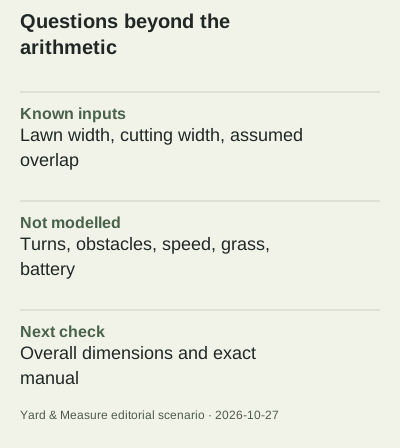
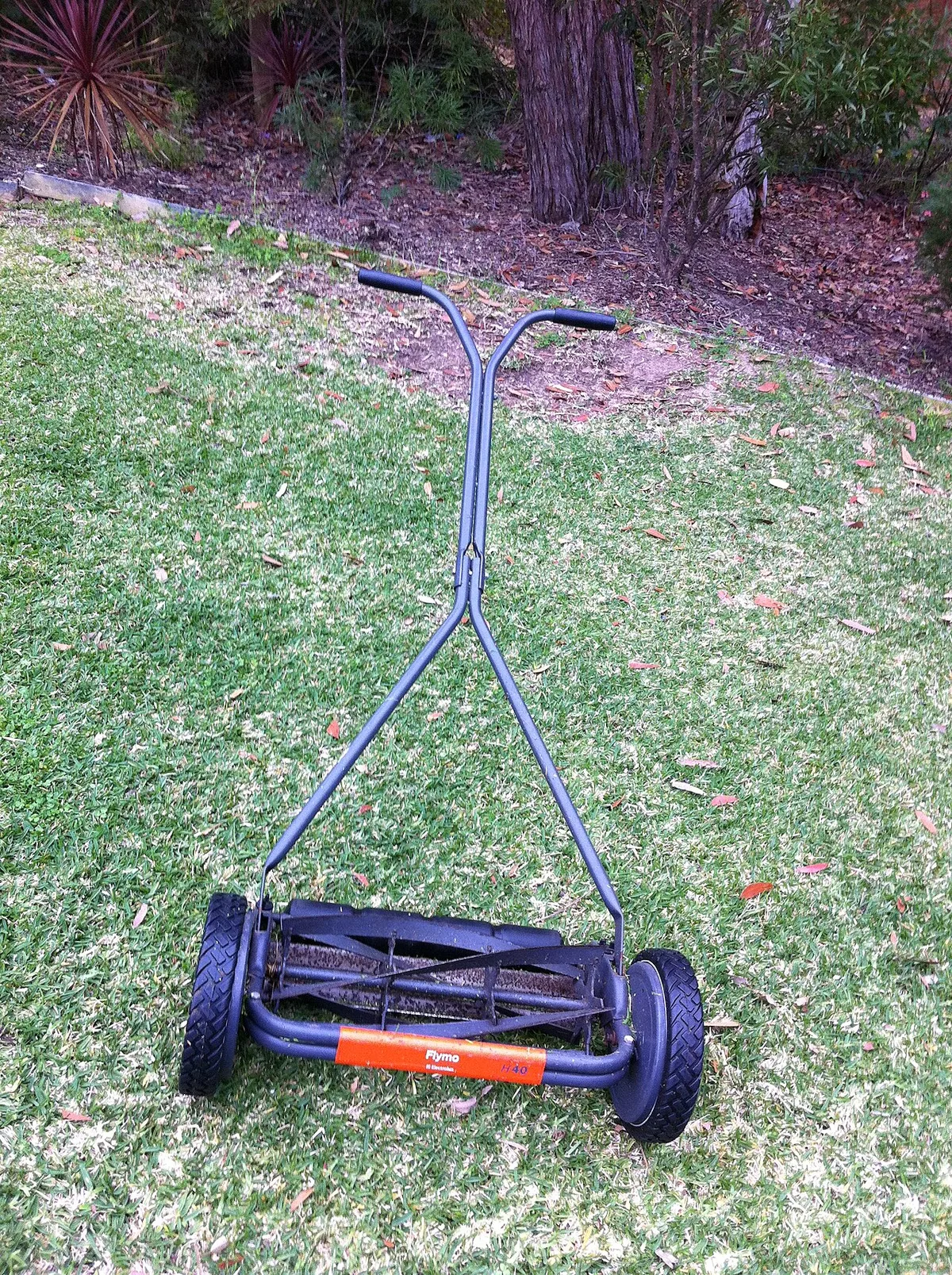
Husqvarna Australia discusses cutting width alongside lawn size in its manufacturer buying advice. That establishes a useful question for a retailer, not proof that one width is suitable for every property. Ask about overall body width, access and the exact model instructions separately. The manual reel mower in the photograph is a reminder that equipment form also varies. It does not represent either hypothetical cutting width in our calculation, and we have not measured its performance.
Husqvarna AU manufacturer buying guidance ?
Keep collection and storage on the same shortlist
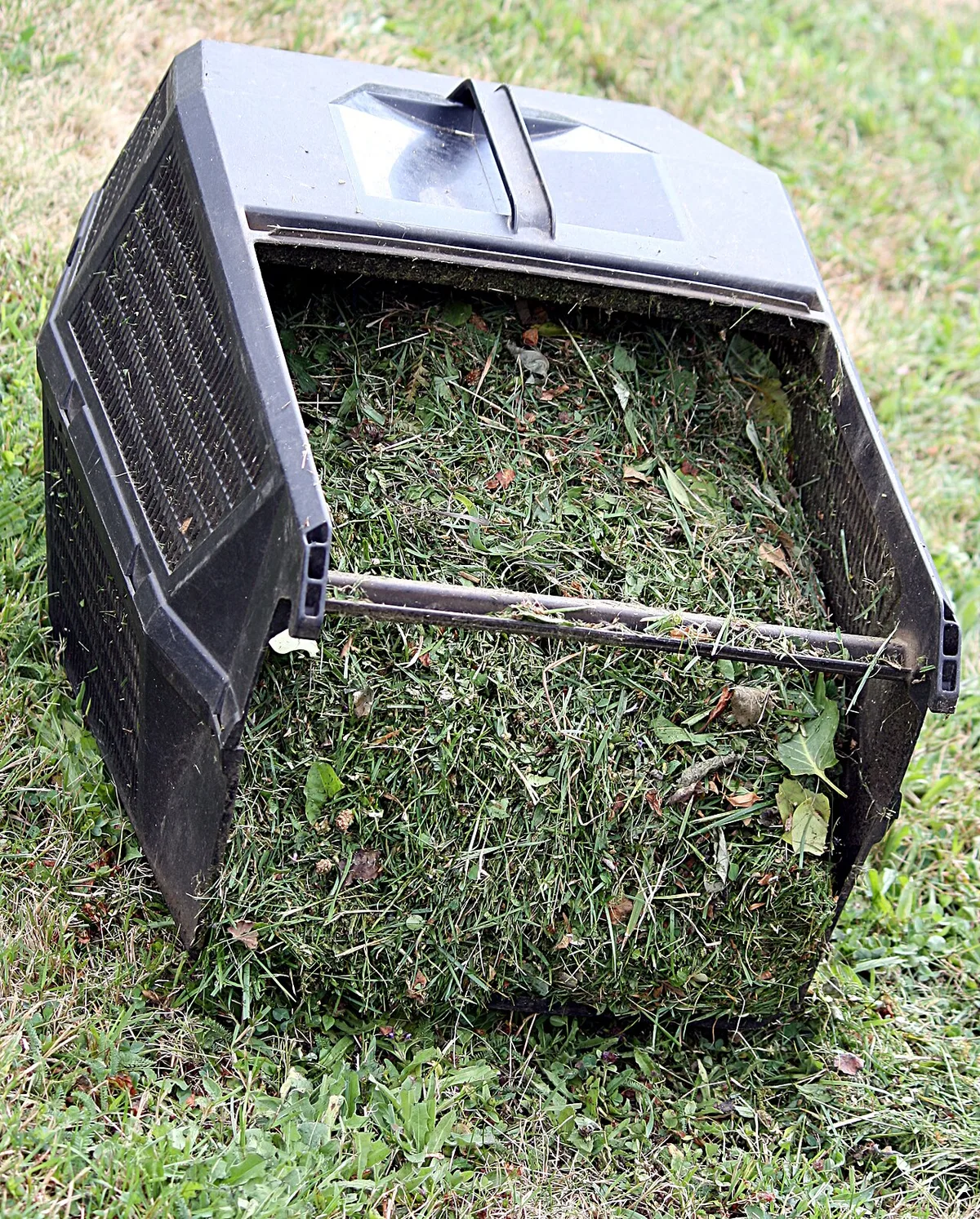
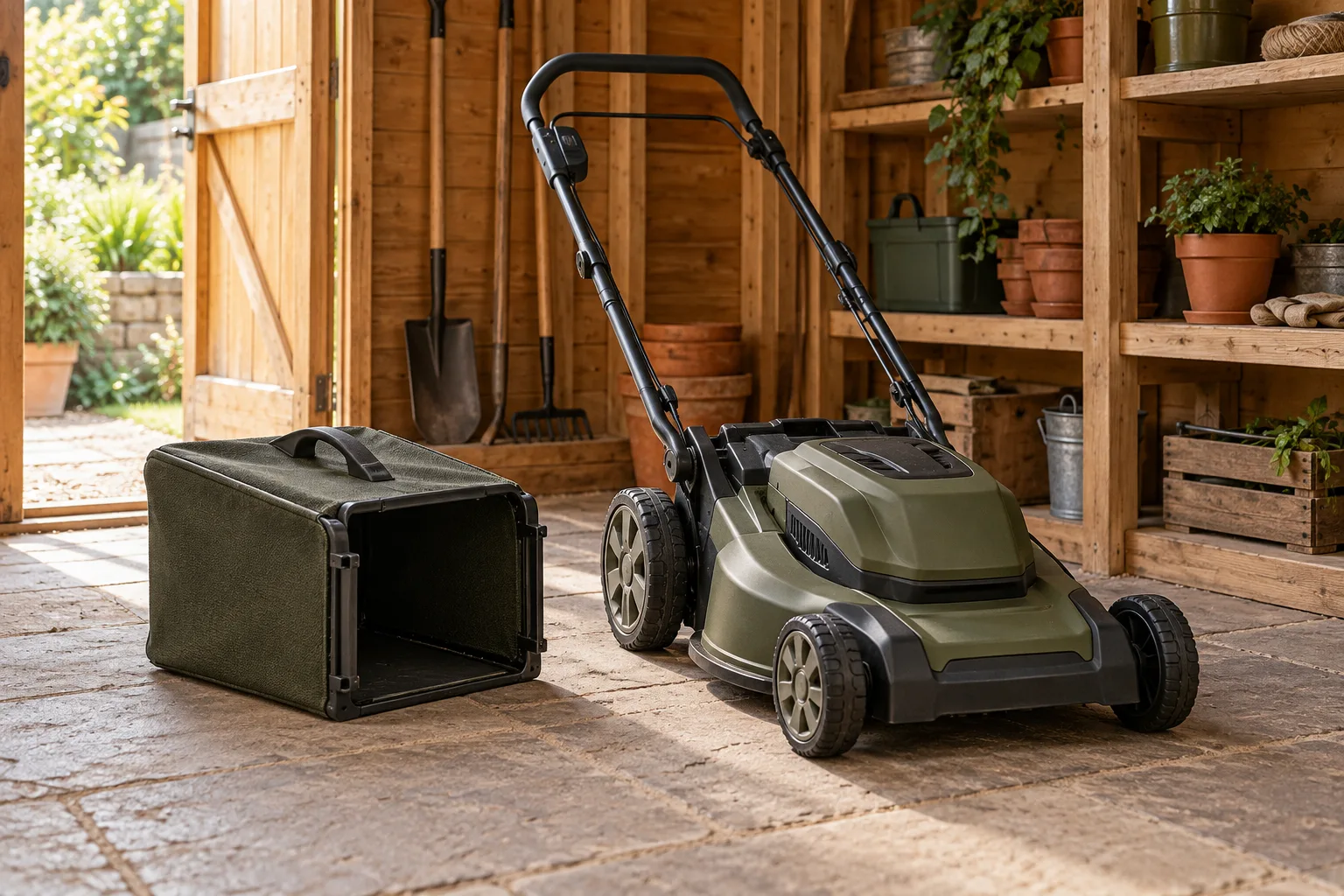
A machine with fewer theoretical passes can still create different handling or storage needs. If a proposed configuration uses a catcher, account for that component as well as the deck. The real detached-catcher photograph makes that separate piece visible. Ask for actual dimensions and included parts instead of reading them from an image. Record the model, manual link and the assumptions behind your comparison. This editorial arithmetic was reviewed on 2026-10-27; it makes no claim about runtime, cutting quality or a currently available model.