Map your lawn edges before choosing a trimmer
A boundary map gives a retailer more useful context than the total length of an undifferentiated lawn edge.
Updated:
Name the surfaces on both sides
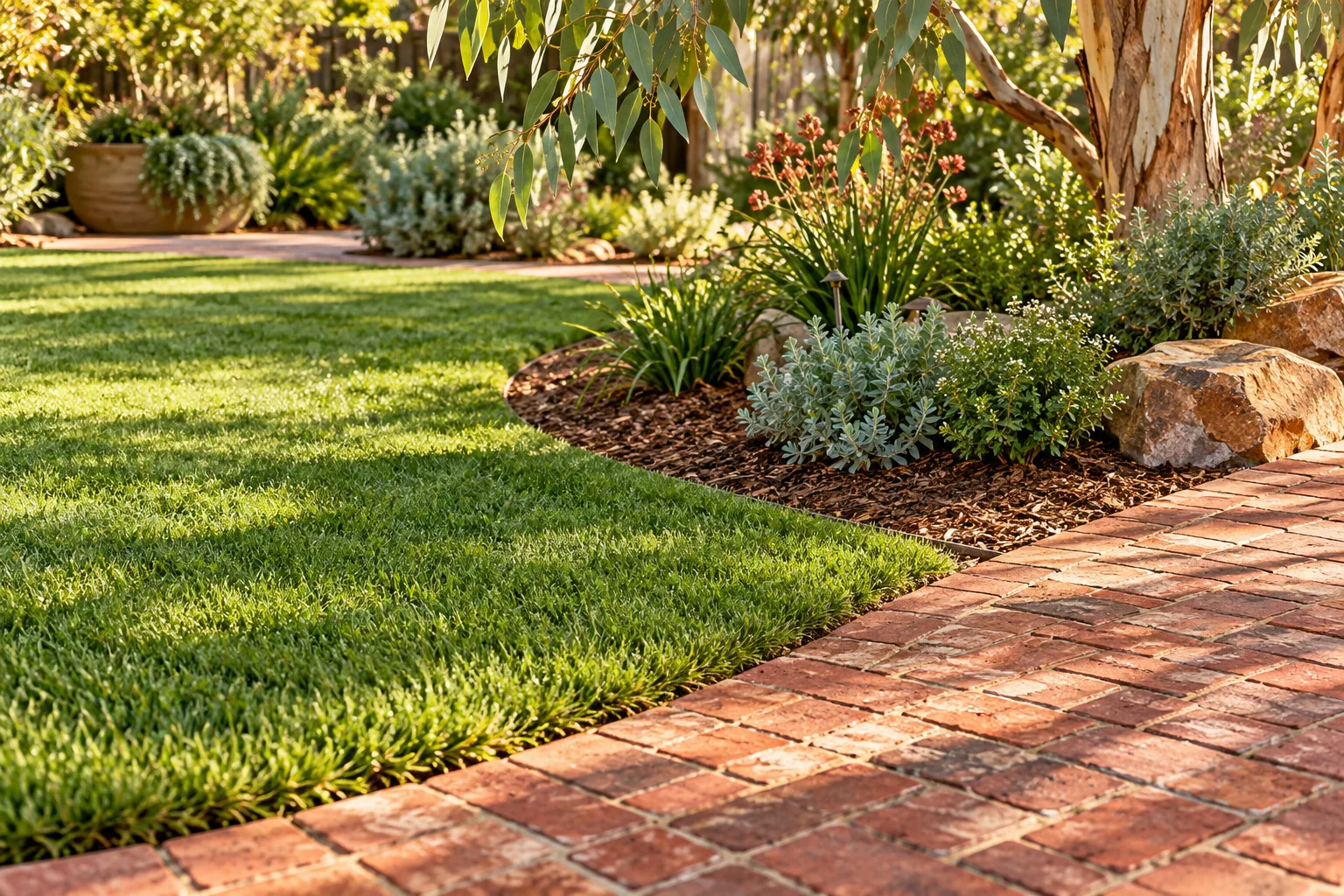
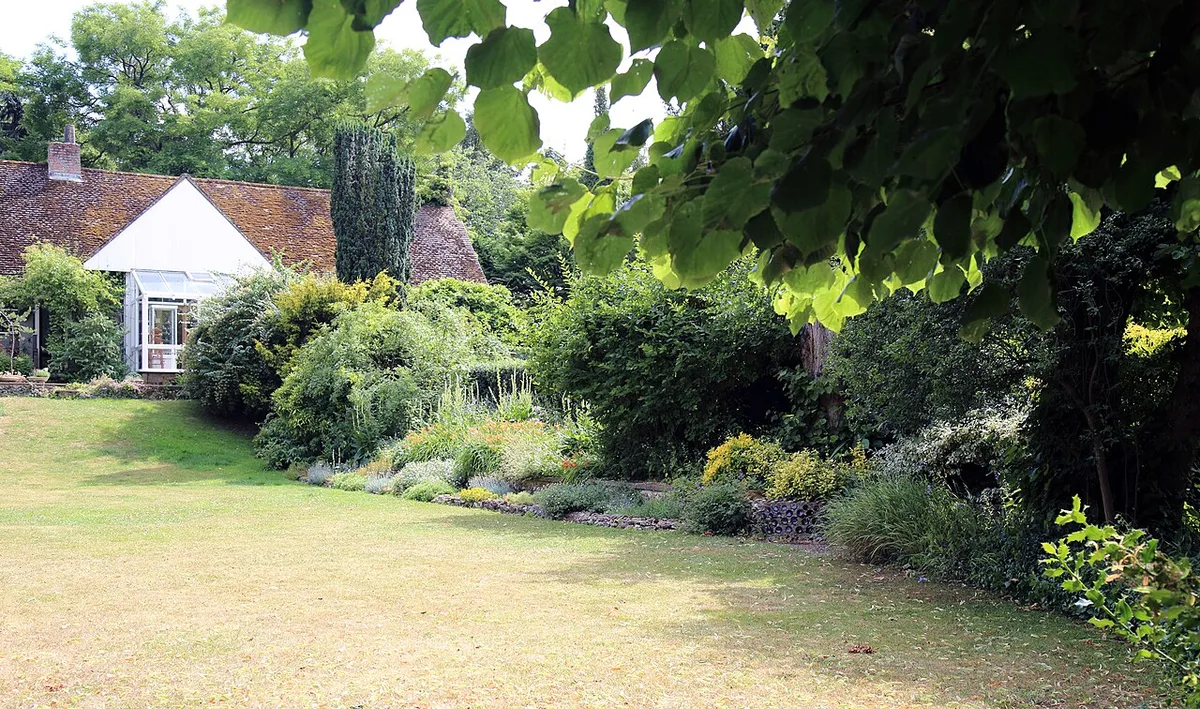
A lawn edge is a meeting of surfaces. Grass beside a paved path presents a different physical setting from grass beside loose mulch, a fence or a planted bed. Before shopping for a trimmer, sketch the boundary and label what sits on each side. The real photograph of a curved English garden bed illustrates why the label matters: the grass boundary changes direction and sits beside plants. It is a layout example, not a recommendation to use any particular tool close to those plants.
Record length without losing the differences
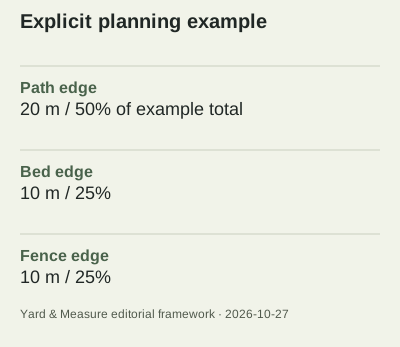
Consider a hypothetical garden with 20 m of path edge, 10 m beside beds and 10 m beside fencing. The total is 40 m, but the path section represents 50% and each other section represents 25%. Keep those categories on the sketch instead of reporting only forty metres. The proportions describe this example, not a workload forecast. Two properties with the same total boundary length can contain very different access restrictions and interruptions.
Mark interruptions as separate questions
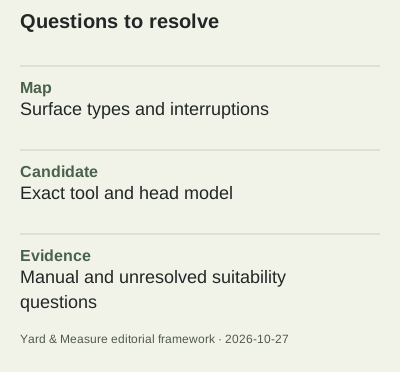
Put posts, corners, steps and fixed objects on the drawing. Add photographs of places where the intended task is unclear, such as a narrow strip between paving and planting. Sydney Water’s garden-planning guidance separates lawn and planting areas for irrigation discussions; here we borrow the habit of clearly labelling areas, not its watering recommendations. Ask a retailer to explain the suitability and limitations of an exact proposed tool for each part of your map. A single product label cannot resolve every boundary condition.
Compare the whole tool and its consumables
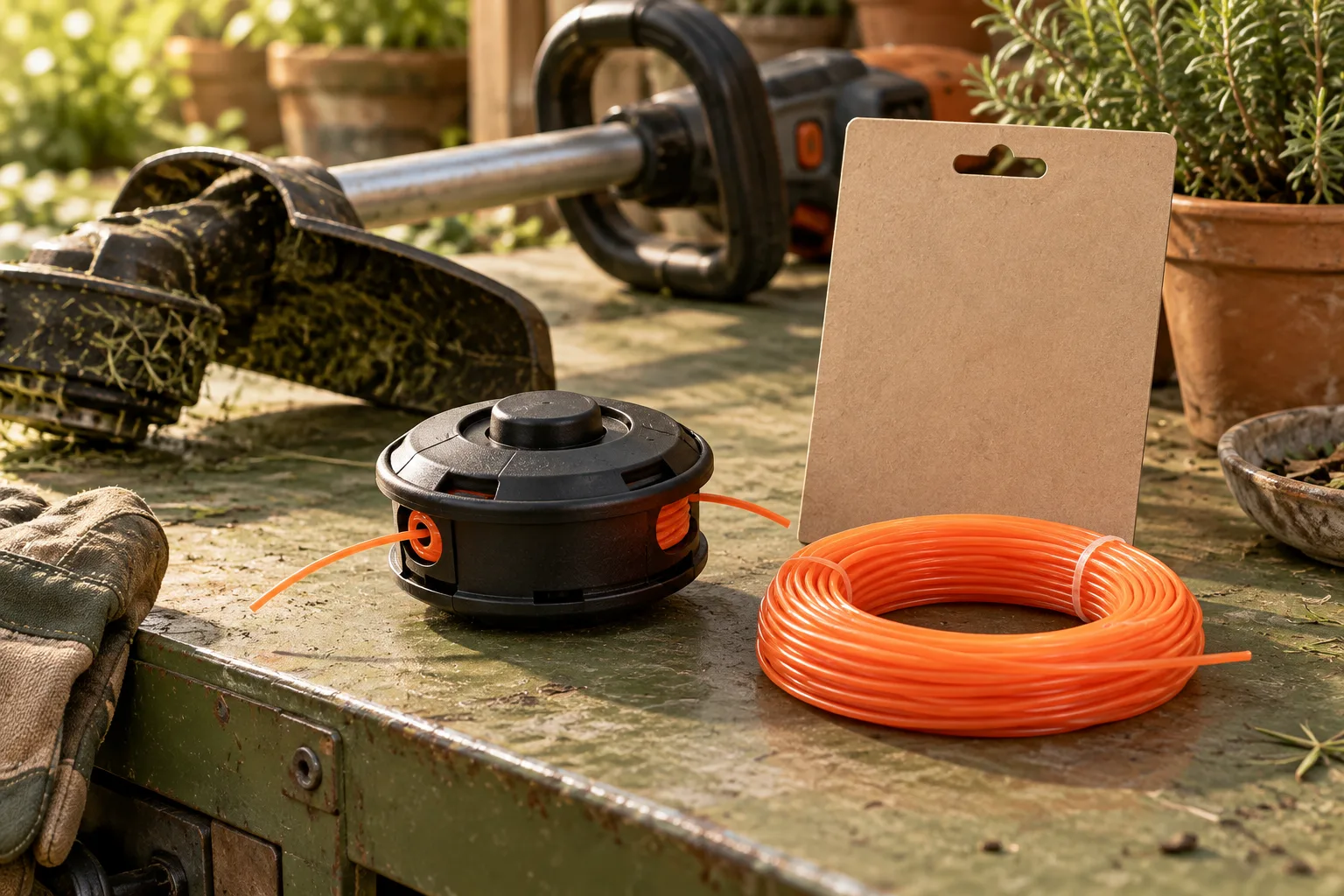
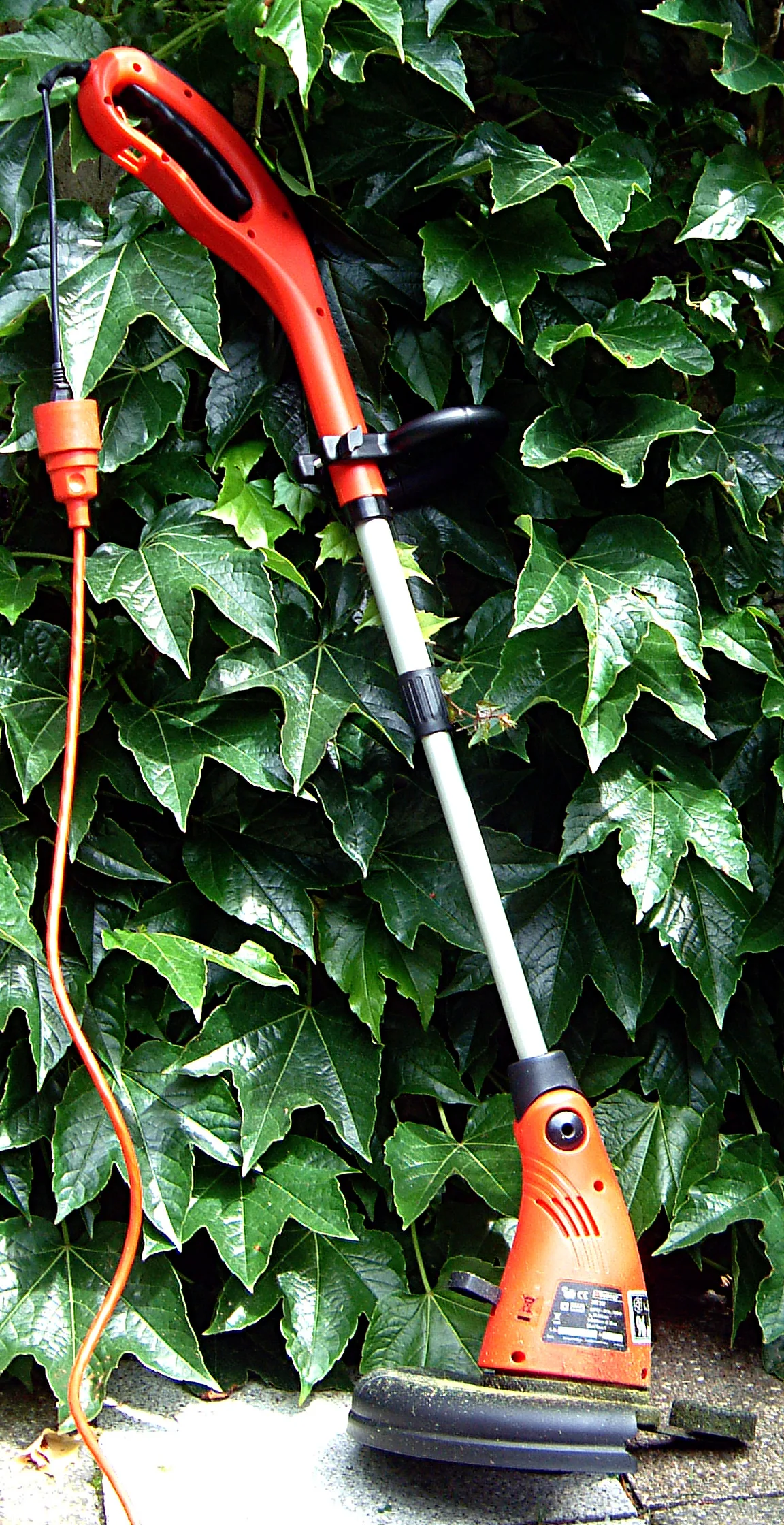
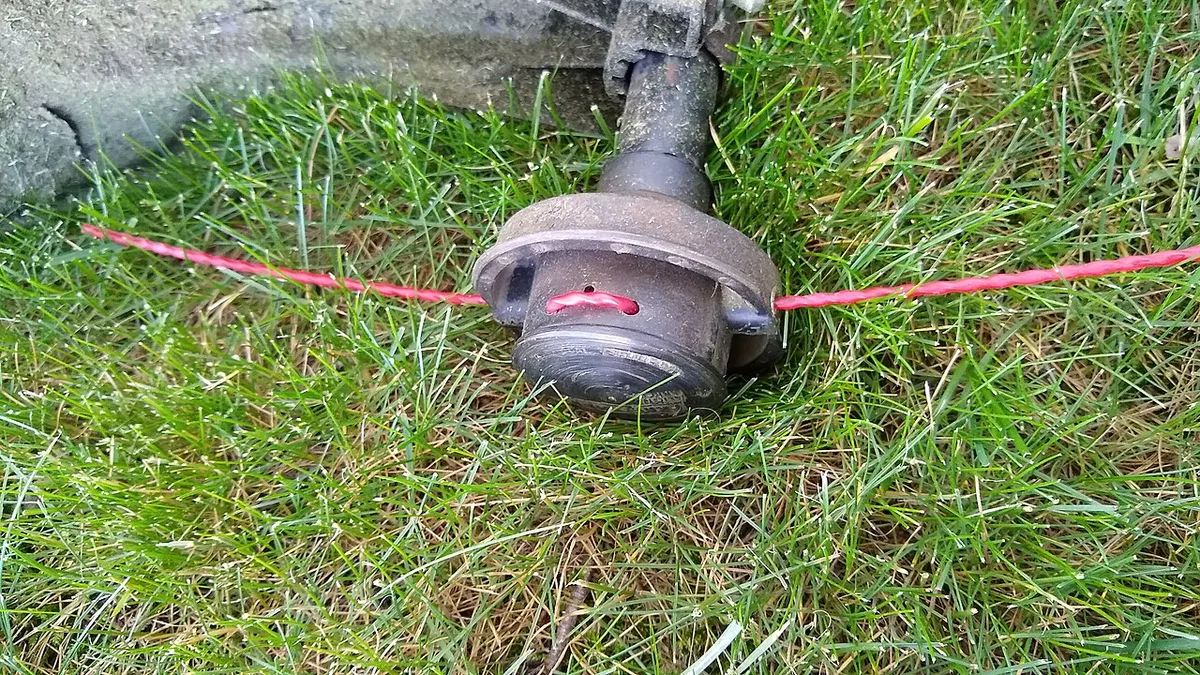
The real photograph of a corded string trimmer shows a handle, shaft and cutting-head area belonging to one complete tool. It does not establish suitability for your garden or the availability of that pictured model. The separate fixed-line head photograph illustrates that head arrangements also differ. RYOBI Australia’s support guidance lists model-specific line information, so a generic trimmer description is not enough to choose replacement consumables. Record the exact model and the documentation that supports the proposed arrangement.
Turn the map into a buying conversation
Bring the map, photographs and a list of unresolved sections to the shop. Ask which tasks the candidate is intended for and where its instructions limit use. Keep manual alternatives or a different approach on the list when a powered tool does not answer a particular need. This is equipment-selection preparation, not guidance for operating near obstacles or people. Reviewed on 2026-10-27, it supplies no clearance distances, cutting techniques, runtime estimates or claims that a particular boundary is safe to trim.
Keep the evidence attached to the proposal
If the seller changes the proposed model, repeat the model-specific questions rather than carrying an earlier answer forward. Save the relevant manual link and note which mapped sections remain unresolved. The useful output is a clear task description with documented answers. A longer specification sheet is less helpful if it never addresses the awkward section that prompted the purchase in the first place.
Sydney Water ? RYOBI Australia model-specific line guidance ?