Buy a care kit for the tools you actually own
Build a care-shopping list from exact tool instructions instead of buying a universal bundle by appearance.
Updated:
Begin with the tools you actually own
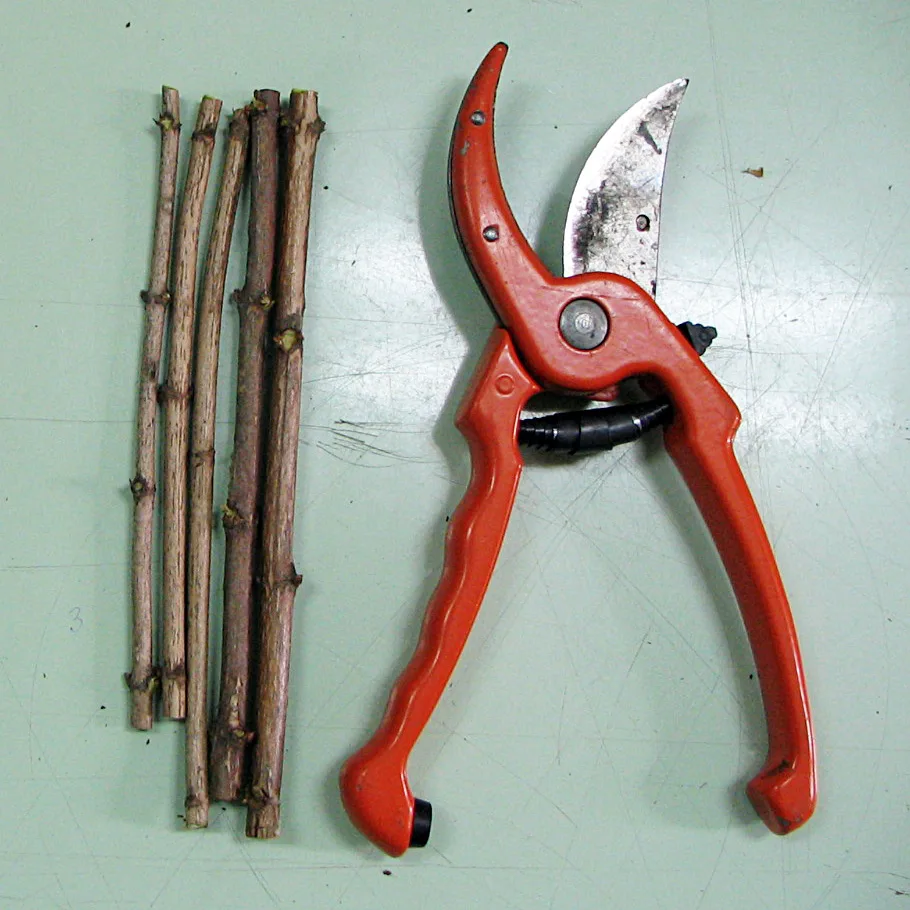
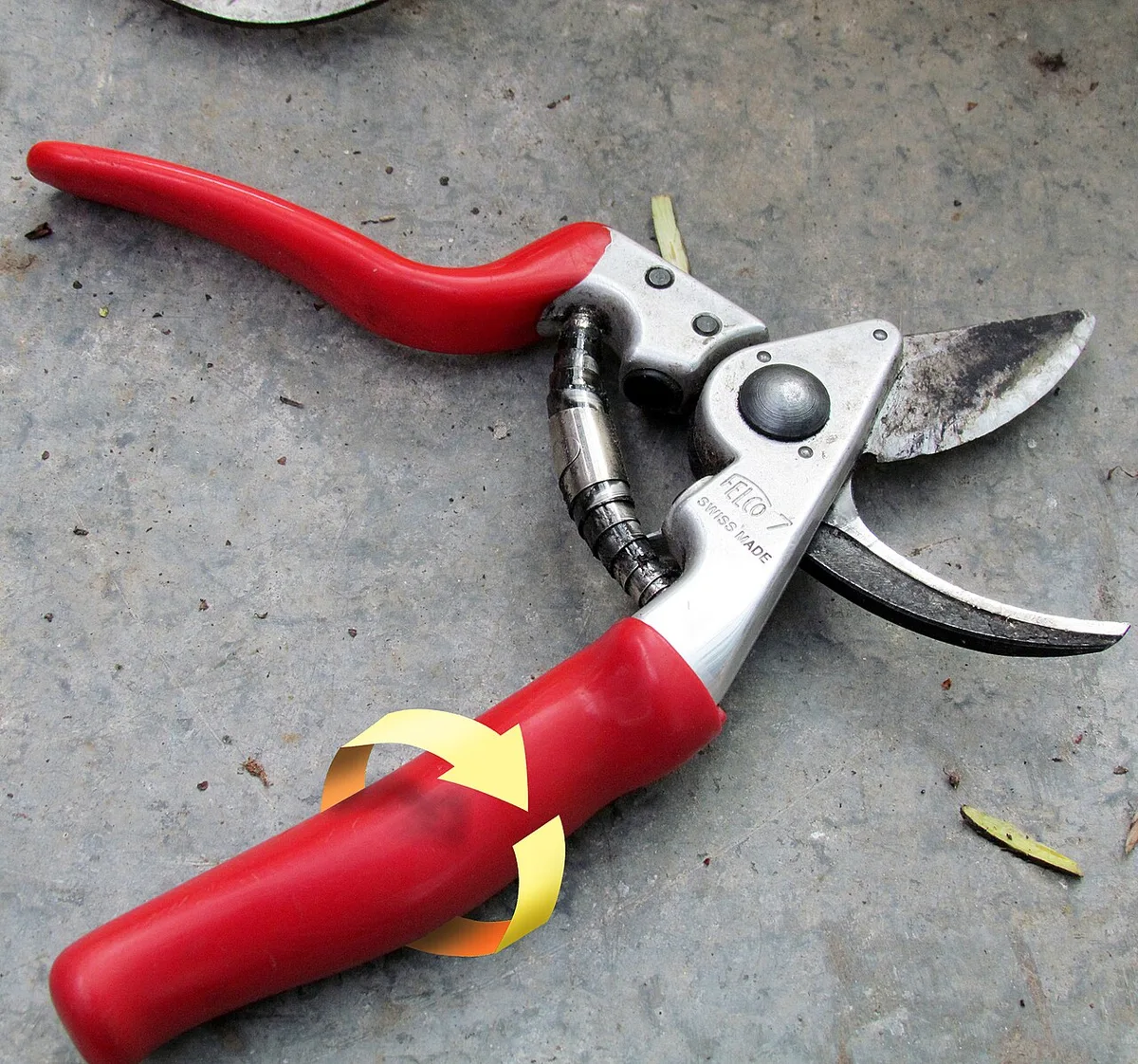
A care kit should answer documented requirements for your equipment. List the exact tools and locate their instructions before buying brushes, oils, cleaners or replacement items. A large bundle can look complete while containing products that have no confirmed role in your kit. The real secateurs-and-cuttings photograph illustrates a cutting-tool form that needs its own manufacturer guidance; it is not a demonstration of cleaning, lubrication or disinfection. This article deliberately does not prescribe a chemical or maintenance method.
Sort requirements before shopping
Create a table with one row per tool and columns for the manufacturer’s stated care items, any restrictions and the source link. Keep a separate column for items already owned whose suitability has actually been confirmed. Do not assume that a product suitable for one metal component is suitable for another handle, coating or mechanism. If instructions are unclear, ask the manufacturer for clarification rather than choosing a familiar household product by analogy.
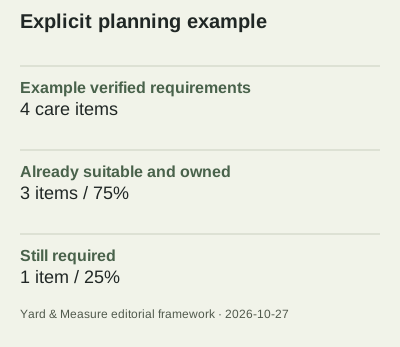
Use a count to expose duplicate purchases
Imagine that four verified care items are required across a small equipment set. If three suitable items are already available, 75% of the item count is covered and 25% remains to be purchased. That does not mean three quarters of the cost is covered: item prices can differ. The point of this hypothetical tally is to avoid buying duplicates before obtaining actual quotes. It is not a recommended universal care kit or a statement about any particular product.
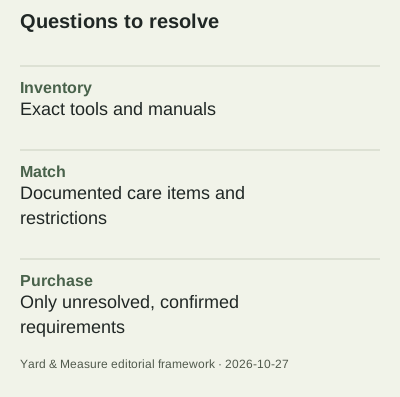
Recognise differences hidden by a category name
GARDENA Australia explains the distinction between bypass and anvil cutting mechanisms. Even within one mechanism, other features can differ. The rotating-handle secateurs photograph illustrates a separate handle design; it does not establish a shared maintenance procedure with the first pictured tool. Use the exact model’s instructions for the equipment in your inventory. A category-level explanation can help identify questions, but it should not be stretched into approval for a cleaner, lubricant or adjustment.
Plan where the approved items belong
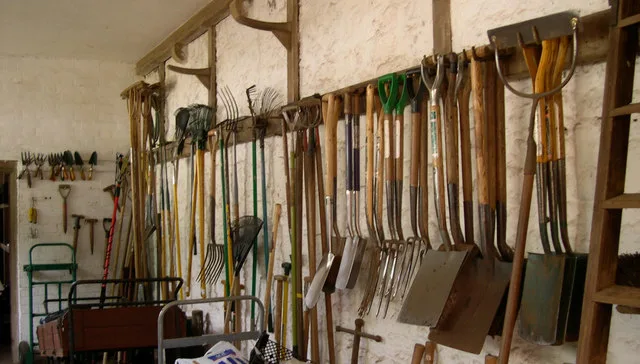
Keep care supplies identifiable and follow their own labels and the equipment instructions for storage. The real potting-shed photograph illustrates a mixed collection of tools, not an approved chemical-storage arrangement. Do not use its visible shelves or hooks as a safety specification. GARDENA’s Australian manual lookup is one route to official product instructions; use the relevant manufacturer channel for other brands and retain the current documentation with your inventory.
Buy only what the record supports
Take the unresolved items to the manufacturer or supplier before completing the order. Ask whether a named product is appropriate for the exact tool and keep the response. Reviewed on 2026-10-27, this guide is a purchasing framework only. It supplies no maintenance interval, mixing ratio, sharpening angle, repair sequence or health claim. A smaller list with clear evidence is easier to maintain than an impressive-looking bundle whose intended uses remain uncertain. Retain the original product label and its instructions; an unlabelled decanted container loses information needed for later identification.
GARDENA AU manufacturer explanation ? GARDENA Australia manual lookup ?